
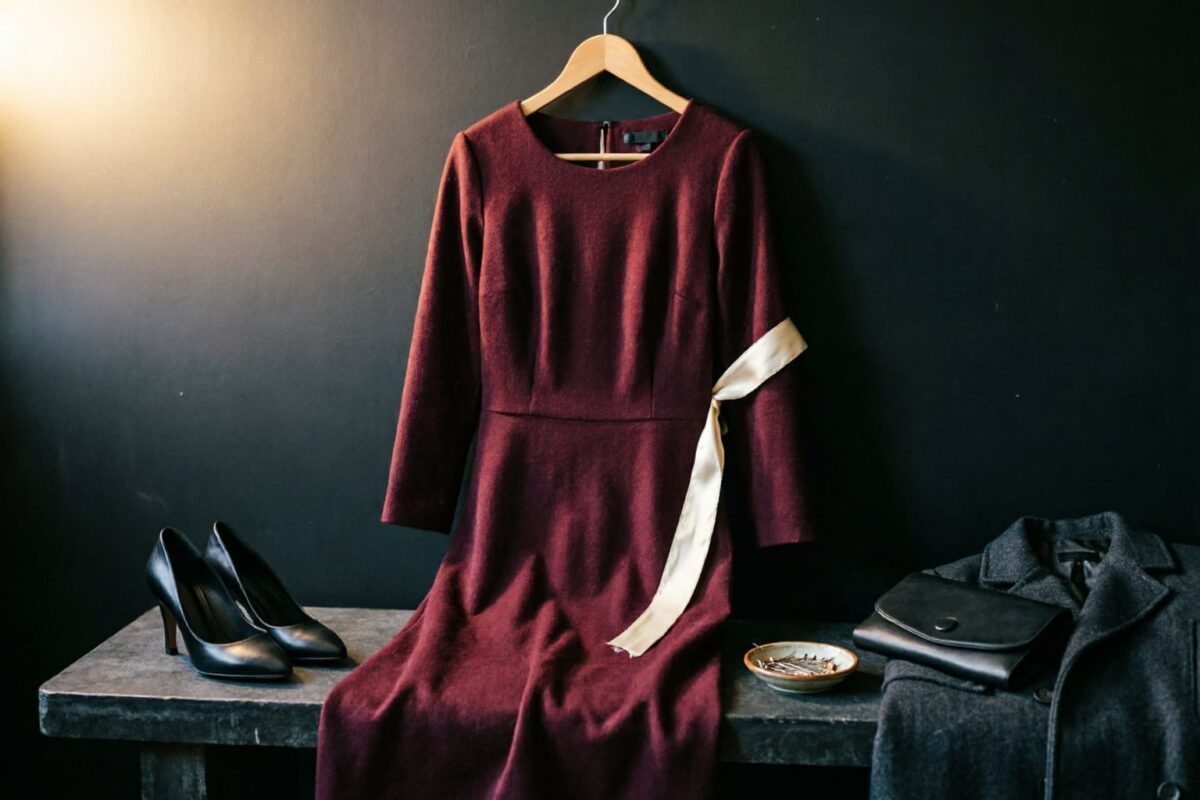
Petite wedding-guest dressing is less about finding a magical “petite” label and more about controlling length, proportion, and alterations. Who What Wear’s November 5 buyer’s guide notes that midi styles are often easier for a shorter frame, but the useful question is where the hem lands with the shoes you will actually wear. A dress can be flattering in the fitting room and still be the wrong purchase if it needs expensive structural work.
Start with the invitation, venue, and shoe plan. Then check the return window, care instructions, and alteration cost before removing tags. That sequence prevents a last-minute panic from turning into a dress that fits one photograph but creates a tailoring bill or a miserable evening.
Start With the Dress Code, Not a Size Label
“Petite” is not a universal fit guarantee. Brands use different proportions for shoulder width, torso length, waist placement, and inseam. A dedicated petite dress may still need hemming, while a regular midi can work when the waist and shoulders sit in the right place. Use the size chart as a starting point, then compare the dress measurements with something you already own.
Who What Wear’s petite editor emphasizes midi styles and a grounded hem because long dresses can sweep the floor without a precise fit. That is practical guidance rather than a rule for every body. A maxi with a defined waist or a slit can work well; a bias-cut column that pools at the ankle usually will not. The fall wardrobe essentials guide can help identify the layers and shoes the dress must coordinate with.
Winter weddings also change the dress code in practical ways. Cold venues may call for long sleeves, tights, a wrap, or a substantial coat that has to fit over the dress. Black-tie usually supports more fabric and structure; daytime cocktail may be easier in a shorter style. Do not judge a dress in isolation if the invitation makes outerwear and comfortable shoes non-negotiable.
Compare Length, Fit, and Alteration Risk
| Dress length | What to check on a petite frame | Main tradeoff |
|---|---|---|
| Short or cocktail | Whether the hem stays comfortable when sitting and dancing | Less fabric to hem, but the exact length is more noticeable |
| Midi | The hem relative to the knee, calf, and planned shoe height | Often easier than a maxi, but a few centimeters can change the line |
| Maxi | Waist position, stride, stair clearance, and whether the hem can be raised without losing the design | Potentially elegant, but hemming may be structural or expensive |
| Asymmetric or draped | Whether the line is intentionally uneven and can survive adjustment | Distinctive shape, but harder to alter without changing the look |
Put on the shoes you expect to wear at the wedding before deciding. A flat shoe changes a midi hem immediately, and a heeled boot or pump can move the same dress into a better proportion. Walk, sit, climb a stair, and stand in front of a full-length mirror. The fall boot guide can help decide whether a boot works with the formality of the invitation.
Ask a tailor for a quote before buying a dress that needs more than a simple hem. Raising a lining, shortening a slit, rebuilding a waist, or correcting shoulder fit can cost enough to erase a sale price. If the dress already requires a new bra, shapewear, shoes, and outerwear, its real cost is higher than the checkout total. Start with the closet cleanout guide to see whether jewelry, a clutch, or a coat already solves part of the outfit.
The tradeoff is fit versus versatility. An affordable regular-size midi with a simple hem may be a better value than a final-sale petite dress that needs several adjustments. A higher-priced dress with strong shoulder fit and an easy hem can cost less over the evening because it needs less work. Compare the total outfit, not the label or the starting price.
Use Accessories to Solve Proportion
Who What Wear’s November 5 accessories guide points out that strong earrings, a scarf, shoes, or a clutch can make a simple outfit feel festive. For a petite dress, accessories can also control where the eye lands. A shoe close to the hem color can lengthen the visual line. A narrow belt can define the waist only if the dress fabric can support it without bunching.
Keep the wedding context in view. Very high heels may change the dress proportions but become impractical at an outdoor venue. A large clutch can overwhelm a small frame if it is carried all night. Statement jewelry is most useful when it frames the face and does not tangle with an asymmetrical neckline. Choose one strong accessory, then let the dress keep its line.
Color can also create continuity. A shoe and bag in the same tonal family reduce visual interruption. The winter fashion color guide can help identify an accent that works with pieces already in the closet. If a new color requires a new clutch, coat, and shoe, it is less efficient than a shade that connects them.
Check Care Labels Before Removing Tags
Under the U.S. Care Labeling Rule, covered textile wearing apparel must include care instructions. Before buying, check whether the dress requires dry cleaning, hand washing, or a low-temperature process that you can realistically follow. A velvet, satin, or embellished dress may be beautiful but high maintenance. The label is not a guarantee that the garment will survive every cleaner, but it is a necessary part of the purchase decision.
Confirm the seller’s return conditions too. Runway samples, final-sale pieces, and altered dresses may not be returnable. If the listing does not provide garment measurements, treat the photographed model height as context rather than proof of fit. Ask for waist, bust, hip, and length measurements when possible, and compare them with a dress that already works.
Skip the dress if the shoulders or bust fit cannot be adjusted at a reasonable cost, if the hem will collect dirt at the venue, or if the care requirements do not fit your routine. Also skip a size that requires shapewear you will be thinking about all night. A formal outfit should let you sit, eat, walk, and dance without constant adjustment.
The decision rule: set the dress code and shoe budget first, check the measurements and return window, compare the hem with the actual shoes, quote any alteration, and only then decide whether the dress is worth buying. The best petite wedding-guest dress is not the shortest or most expensive one. It is the one that reaches the right place and stays comfortable through the event.
Updated November 6, 2026. Written and edited by the BeautyPick Lab editorial team. This article summarizes cited public guidance and editorial coverage and does not represent firsthand testing.
Sources
- Chwatt, Nikki. 28 Best Petite Wedding Guest Dresses for Winter. Who What Wear, November 5, 2026.
- Huber, Eliza. The Specific Accessories I Swear By to Make Basics Look Festive at Holiday Parties. Who What Wear, November 5, 2026.
- U.S. Government Publishing Office. 16 CFR Part 423: Care Labeling of Textile Wearing Apparel and Certain Piece Goods.
