
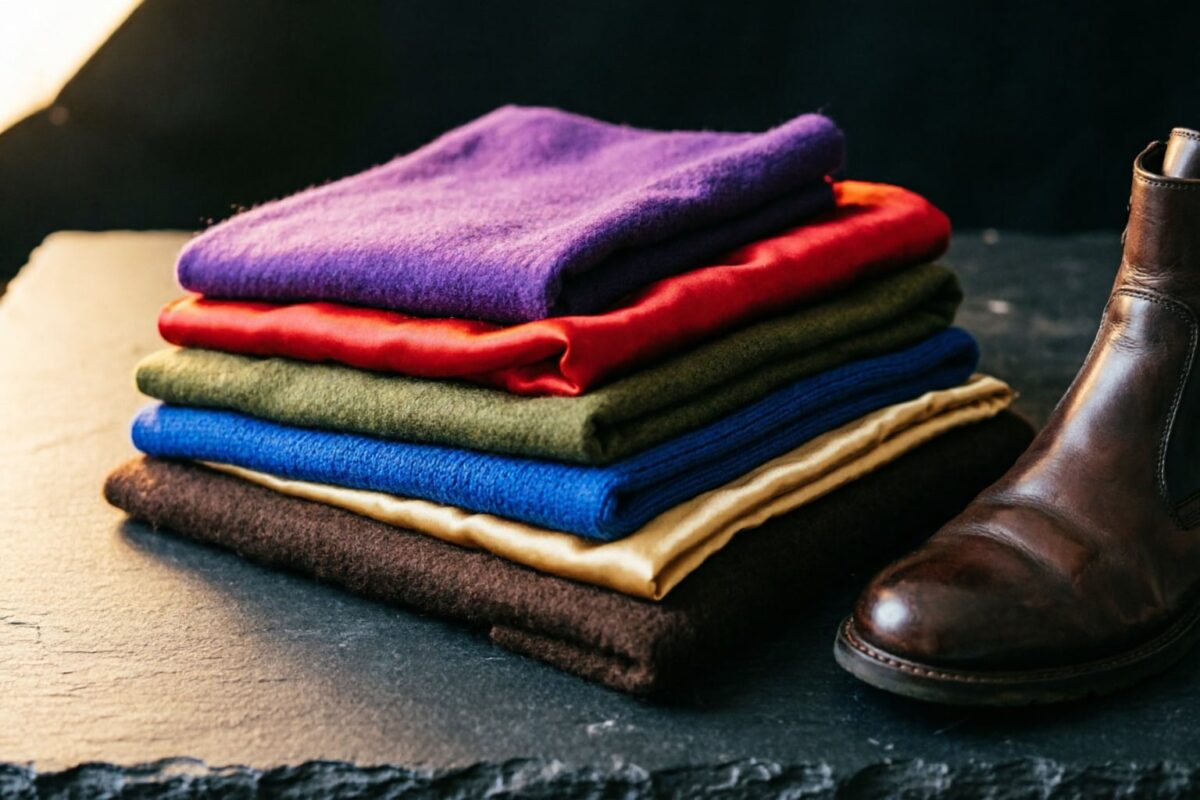
Winter wardrobes have leaned on burgundy, navy, black, and brown, but 2026 offers more range. Who What Wear highlights vivid purple, liquid gold, red, olive, cobalt, and chocolate brown. Vogue’s runway coverage also confirms electric blue, red, and purple. The overlap makes these directions practical.
A trend should make existing clothes feel new, not require a new wardrobe. A scarf, knit, tights, or bag can do that work. Ask whether one shade supports three outfits you already like. Review the fall wardrobe essentials guide, then choose color around pieces in regular rotation.
Why the Season Feels More Colorful
Both reports show a move toward expression rather than one polished uniform. Vogue points to bold monochrome, saturated accessories, and unexpected combinations. Who What Wear describes a jolt of energy after seasons of understated tones. Bright color appears in complete looks and in smaller flashes that are easier to adapt.
Pick the shade that solves a wardrobe gap. A red coat can energize black basics. Olive can replace a gray blazer without feeling difficult. Cobalt tights can update a brown outfit for less than a new dress. The size of the purchase should match the amount of risk you want to take.
The Six Shades Worth Considering
Vivid purple is brighter than deep plum. Who What Wear describes it as confident and energetic, with a quality that can read luxurious without looking formal. A knit is an easy first step because it works with black, charcoal, cream, and denim. If that feels like too much, use a bag or scarf. A knit connects to the fall 2026 knitwear guide.
Liquid gold is the most extroverted shade. Who What Wear points to gold moving beyond party dresses into blouses, coats, and accessories with a satin or silk finish. Material changes the effect: a matte gold knit feels easier by day than a high-shine metallic piece. If shine feels difficult near the face, keep it lower on the body.
Pillar-box red is direct and high contrast. Vogue found red continuing on the runway, worn head to toe or through sweaters, bags, gloves, and scarves. Who What Wear highlights its volume this winter and suggests pairing it with a black base. A red knit with black trousers is manageable; a full red coat makes a bigger statement.
Olive green is the quietest route into the palette. Who What Wear calls it a gateway color because its muted undertone works with cream, taupe, navy, black, and brighter shades. It can replace gray in tailoring or black in outerwear without a loud contrast. If olive looks muddy beside your clothes, try an accessory first. A tailored jacket or trousers earns its place across seasons.
Cobalt blue connects naturally to denim. Vogue emphasizes electric blue in monochrome looks and alongside neutrals, while Who What Wear points to cobalt knits, trousers, and tights. Pair a sweater with indigo jeans, or use tights beneath a brown or taupe coat. One piece usually supplies all the color an outfit needs.
Chocolate brown is less surprising than the other five, but remains useful. Who What Wear describes it as an enduring winter neutral, especially in tonal outfits that combine shades and textures. Vogue places burgundy in the same cold-weather category. Chocolate anchors black, cream, camel, and gold. A brown bag, boot, or knit is practical if you want a current color without changing the wardrobe’s mood.
Choose One Anchor, One Accent
Build around one anchor color rather than buying several trends. The anchor can be a coat, trousers, or knit that appears in many outfits. The accent can be a bag, shoe, scarf, or tights that adds contrast without taking over. This keeps a new color from becoming a one-outfit purchase. Fit and comfort matter more than a perfect online image.
Place the shade beside three tops or bottoms you own and check it in daylight. Vivid purple may harmonize with cool gray and look harsher beside warm beige. Cobalt can energize cream and camel but overwhelm a multicolor print. Olive is easiest for a small capsule, while red or gold creates more impact. These outcomes show which version belongs in your closet.
Pair Color With Fabric, Not Just Hue
Fabric changes a color. Saturated wool looks grounded, while the same shade in satin becomes reflective and more evening-oriented. Gold depends on shine, so a small accessory may be more versatile than a jacket. Red in a matte knit supports daily dressing; red leather becomes a focal point. Brown gains depth from mixed textures because tonal contrast becomes visible.
Shoes are a useful way to test proportion. A red or cobalt shoe adds color below the hem and leaves the upper body neutral. Simple boots and statement shoes can carry a trend through several winters. The fall 2026 boot guide helps separate a wearable shape from a one-outfit choice. A scarf or knit is a softer option if colorful shoes feel exposed.
Not every piece needs a trend color. Black, denim, cream, gray, and navy give the new shade something to work against. A full monochrome runway look requires more matching than most wardrobes support. Tonal dressing works best with chocolate or olive because texture prevents a flat result.
Test a Trend Before Buying
Start with the smallest item that answers the question. Try a purple scarf, tights, or bag before a coat. If red already works with your accessories, a sweater is a logical next step. If gold appeals only in photographs, choose a small returnable piece. Learn whether the color fits your real wardrobe.
Check the return window before removing tags, then view the color indoors and outside. Winter light can turn olive gray; warm indoor light can make red orange. For an expensive item, photograph it with planned clothes and pause before deciding. That catches purchases that work with only one outfit.
Skip the trend if the color requires new shoes, a bag, and a coat to make sense. It should simplify dressing, not create a second wardrobe. The decision rule: choose one anchor and one accent, confirm the shade in daylight with clothes you own, and buy only the piece that completes several outfits.
Sources
- Who What Wear. I Wouldn’t Say Burgundy Is \”Out\”, But These 6 Alternative Colour Trends Are Definitely In. October 28, 2026.
- Zendejas, Andrea. The Top Fall 2026 Color Trends, From Royal Purple to Juicy Peach. Vogue, August 21, 2026.
