
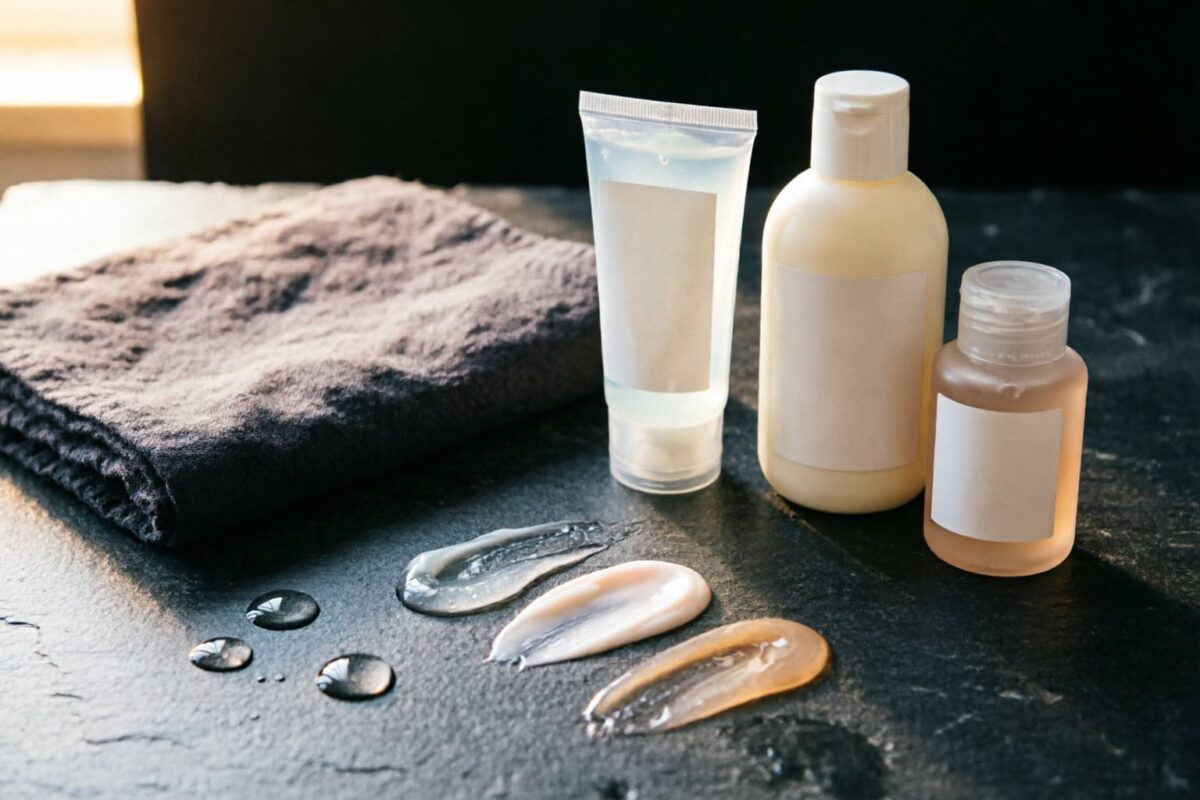
A glowy sunscreen should make daily sun protection easier to wear, not turn the face into an oil slick. Allure’s November 4 report describes a useful split: some formulas use reflective pigments for a pearlescent finish, while others rely on emollients and tints for a softer, glazed effect. The finish is cosmetic; the protection still depends on broad-spectrum coverage, enough product, and reapplication.
The right choice starts with skin type and makeup habits rather than the word “glow.” Oily skin may prefer a light lotion with a satin finish, while dry skin may appreciate squalane, glycerin, or ceramides. Makeup wearers need to know whether the sunscreen pills under foundation. Anyone who dislikes visible cast should compare tinted mineral and clear chemical formulas instead of assuming all mineral sunscreens look chalky.
What “Glow” Means in a Sunscreen
Allure identifies two broad routes to a dewy look. Optical pigments such as mica and synthetic fluorphlogopite reflect light and can create an immediate pearlescent sheen. Emollients and tinted pigments can instead deliver a smoother, slightly bronzed finish. Neither approach determines UV protection, and neither is inherently better for the skin.
The American Academy of Dermatology recommends a broad-spectrum sunscreen with SPF 30 or higher for everyday use. It also advises using enough product to cover exposed skin and reapplying at least every two hours during sun exposure, or after swimming or sweating. Those rules do not change because a formula looks elegant. A product that is pleasant enough to use consistently is valuable, but SPF and application still matter more than the glow.
| Finish route | Likely best for | Main tradeoff | What to check |
|---|---|---|---|
| Clear chemical SPF | People who dislike visible mineral cast and prefer a lightweight base | Can sting around the eyes or feel too fluid for dry skin | Broad-spectrum label, fragrance, eye comfort, and how it behaves under makeup |
| Tinted mineral SPF | Readers who want some coverage and a softer cast | The tint may not match the neck or may transfer | A close undertone match and a test on the jawline |
| Emollient-rich SPF | Dry skin and a dewy, moisturizer-like finish | Can feel heavy or greasy on oily skin | Glycerin, squalane, ceramides, and how quickly the finish settles |
| Pearlescent SPF | Makeup-free days when visible radiance is the goal | Reflective particles can emphasize texture or look shiny in photos | Particle size, finish in daylight, and eye comfort |
Allure’s 2026 edit gives useful examples without proving that one formula will suit every skin type. Innisfree Daily Defense UV Sunscreen is described as a lightweight chemical option, while Ranavat Daily Brightening Mineral Face Sunscreen is presented as a tinted mineral formula with a luminous finish. Use those examples to understand the category, then verify the current ingredient list and label before buying.
Match the Finish to Your Routine
For oily skin, start with a fluid or gel-cream that leaves a satin rather than wet finish. Allure lists Saie Sunvisor as its pick for oily skin, but the more portable rule is to avoid extra oils, heavy butters, and a dewy film that never settles. A translucent powder can reduce shine without removing sunscreen, although reapplication still needs to happen.
Dry skin can tolerate more emollient textures, especially in winter. Look for humectants and barrier-supporting ingredients, then judge whether the product feels comfortable under makeup. The dry versus dehydrated skin guide can help separate tightness from simple oil deficiency. A rich sunscreen is not automatically hydrating enough to replace moisturizer, and a lightweight one is not automatically inadequate.
Makeup wearers should test the full sequence rather than the sunscreen alone. Apply the product, let it settle, then use the foundation or concealer normally. Pilling often appears when several water-based or silicone-heavy layers are combined in the wrong order. If the base rolls up, try less product or a thinner layer before blaming the SPF. The foundation shade guide explains how undertone and oxidation can complicate a tinted sunscreen match.
For a no-makeup day, a pearlescent formula can act as the finishing step. For a long office day or an event with photography, a softer satin finish is usually more predictable. Glow should be visible in daylight but not so reflective that it hides the skin’s texture or creates flashback. Check the face in a window and with a phone flash before deciding whether the finish is flattering.
Apply Enough Without Ruining the Finish
The AAD recommends applying sunscreen generously enough to cover all exposed skin, and reapplying at least every two hours during sun exposure. A cosmetic product described as glowing does not reduce that requirement. The practical challenge is layering enough product without a greasy film. Apply the sunscreen first, allow it to set, and use a light hand with foundation rather than trying to compensate with powder.
When reapplying over makeup, use a formula you can press or tap into the skin without dragging the base. A stick, cushion, or mist may be easier for touch-ups, but the AAD notes that sprays require careful coverage and should not be inhaled. Follow the product label. Reapplying less-than-generously can leave gaps even when the original layer was adequate.
Do not mix sunscreen into foundation unless the product instructions explicitly support that use. Diluting the sunscreen can make the delivered protection uneven. If a tinted SPF is acting as your base, check the amount you use against the label and treat additional coverage as makeup, not extra protection. The sunscreen ingredient and SPF guide explains why a high number on the bottle is only one part of the decision.
Who Should Skip the Glow
Skip pearlescent or heavily emollient sunscreens when the skin is actively breaking out, irritated, or reacting to fragrance. Also skip a tint if you cannot test it near the jawline. Reflective particles can highlight rough texture, and a tinted formula that does not match can create a visible line at the neck. These are cosmetic tradeoffs, not reasons to abandon sunscreen.
Anyone with a history of skin cancer, a new changing spot, or a reaction to sun protection should consult a board-certified dermatologist rather than choosing by finish. People who cannot tolerate the sensory feel of a product should look for another vehicle, such as a lotion, stick, or spray used according to the label. The best sunscreen is still one the person can apply thoroughly and repeatedly.
The decision rule: choose a broad-spectrum SPF 30 or higher first, match the finish to your skin type and makeup routine second, and test the product in daylight before buying a full size. A glowy sunscreen is worth keeping when it supports generous application and comfortable reapplication, not merely because it makes the skin look radiant for the first hour.
Updated November 5, 2026. Written and edited by the BeautyPick Lab editorial team. This article summarizes cited public guidance and editorial coverage and does not represent firsthand testing or medical advice.
Sources
- American Academy of Dermatology. How to Select Sunscreen.
- American Academy of Dermatology. How to Apply Sunscreen.
- Smith, Tasha Nicole. 11 Best Glowy Sunscreens of 2026 for Radiant, Protected Skin. Allure, November 4, 2026.

[…] to settle before sunscreen. If makeup pills, apply less product or simplify the layers. The glowy sunscreen guide can help pair a dewy serum with a sunscreen finish that does not make the face look wet. At night, […]