
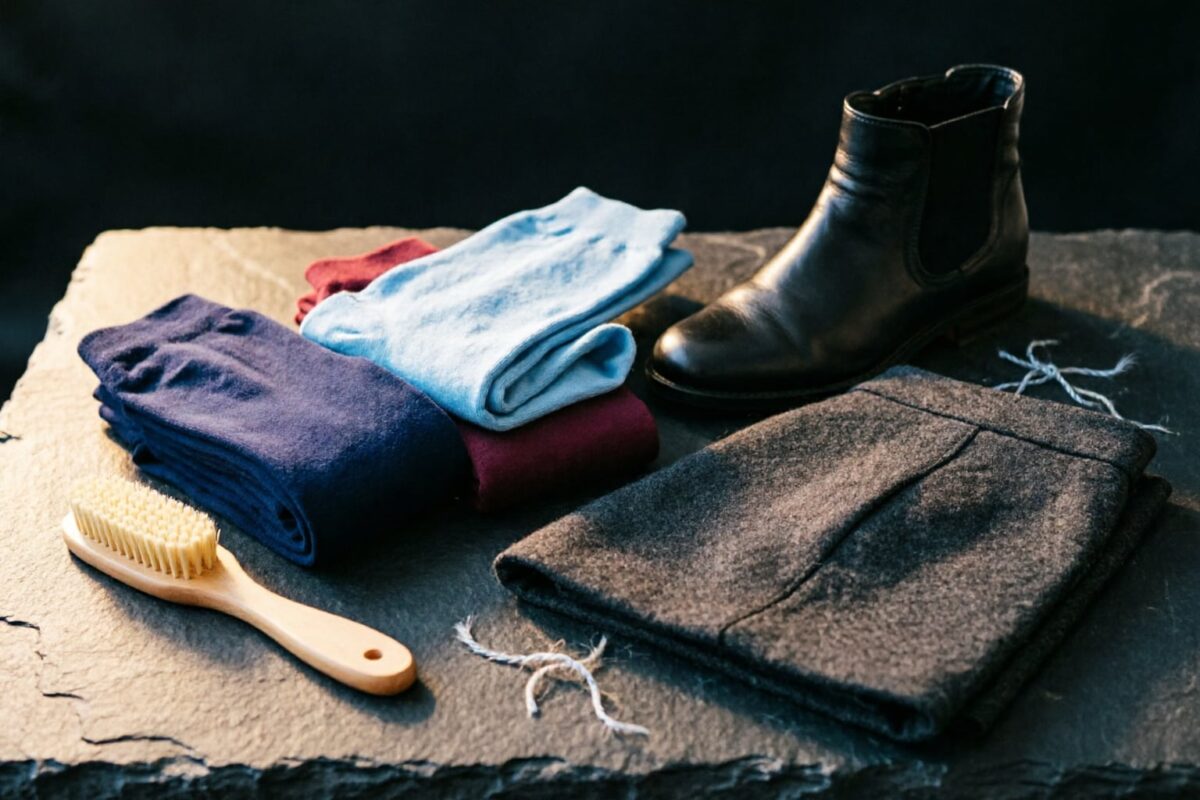
Winter tights are no longer just a background layer. Who What Wear’s November 10 report highlights blue tones, opaque color, patterned sheers, and statement finishes that can change an outfit without requiring a new dress or skirt. The useful purchase is still the pair that stays comfortable through sitting, walking, and a full day in shoes. Color comes after fit, fiber, and care.
Start with the garment label, then test the waistband and toe seam. A high denier does not automatically mean warmer or better; fiber content and construction matter too. Tights should feel supportive without pinching the waist or pulling at the toes. If one pair can work with three existing shoes and two skirt lengths, it is more valuable than a novel color that stays in the drawer.
Why Tights Are a Winter Trend Again
Who What Wear frames tights as a low-friction way to refresh pieces already in the closet. Deep navy, icy blue, burgundy, opaque color, and patterned sheer styles can make a familiar black skirt or dress feel different. The report emphasizes small changes: switching the finish, adding a blue tone, or using a subtle pattern instead of replacing the whole outfit.
That makes proportion important. A colored tight draws the eye to the leg, so the shoe and hem need to work together. A dark opaque pair with a knee-high boot creates a continuous line; a sheer patterned pair with a pointed flat creates more contrast. Neither is better for every outfit. The fall boot guide can help decide whether the boot shaft and tight color belong together.
Opaque tights are the easiest entry point because they behave like a solid accessory. Sheer patterns require a second check in daylight and with the actual shoe. A delicate pattern can disappear under a dark boot or compete with a textured skirt. If the outfit already has a strong print, a solid tone is usually easier to repeat. The fall wardrobe essentials guide can help identify the skirts and shoes the tights need to support.
Compare Tights by Fiber and Finish
| Type | Likely strength | Main tradeoff | What to check |
|---|---|---|---|
| Dense opaque microfiber | Uniform color and a smooth line with boots | Can feel warm indoors and may pill with friction | Waistband comfort, crotch fit, and fiber content |
| Wool or wool-blend tights | Warmth with a more textured surface | Can feel scratchy or require special care | Wool percentage and the care label |
| Sheer patterned tights | A lighter statement for dinner or events | More vulnerable to snags and less warm | Pattern scale, stretch recovery, and toe seam |
| Ribbed or textured opaque | Visible texture that works with simple outfits | Bulk can compete with a close-fitting shoe | Whether the ribbing stretches unevenly when worn |
The Federal Trade Commission’s textile fiber rules, codified in 16 CFR Part 303, require covered textile products to disclose fiber content and other labeling information. Use the percentage breakdown rather than relying only on “wool blend,” “cashmere feel,” or “thermal.” A small amount of wool can add texture without making the tight as warm as the word suggests. Synthetic fibers can improve stretch and recovery, but the ratio still matters.
Denier describes the weight or thickness of the yarn, but brands do not always use it consistently across products. Two 70-denier tights can feel different because of fiber, knit density, and fit. Treat the number as a comparison clue within one brand, not a universal warmth rating. Read the label and judge the fabric in hand when possible.
Test Fit Before the Event
Put the tights on at least a day before wearing them out. Sit, squat, climb stairs, and walk in the shoes you plan to wear. Check whether the waistband rolls, the crotch drops, or the toe seam presses into the toes. Pulling the tight higher can solve some fit problems, but overstretching the leg and foot creates tension elsewhere. A larger size is often more comfortable than forcing a smaller one.
Toe shape matters. A reinforced toe can feel bulkier in a close-fitting pointed shoe; a sandal-toe construction may suit open shoes but can be less durable. If you are between sizes, compare the brand’s height and weight range with your own rather than choosing from the package model. The petite wedding guest dress guide explains how leg line and shoe height affect a formal outfit.
Keep one pair in a neutral tone that matches your most common boots and skirts, then test a second color or pattern. A deep blue may be easier to repeat than a bright seasonal shade. If the tight is meant for a specific event, check it with the exact dress, coat, and bag. A small color difference that looks subtle on the bed can become obvious under evening light.
Care, Longevity, and What to Skip
Read the care instructions before washing. The U.S. Care Labeling Rule in 16 CFR Part 423 requires care directions for covered textile wearing apparel. Hand washing or a mesh laundry bag may be appropriate for some delicate tights, but the garment label controls. Avoid assuming that every pair can go through a hot dryer. Heat and abrasion can shorten the life of thin fibers.
Inspect the toes, heels, and waistband after each wear. Small snags are easier to manage before they become runs. Store tights separately from hooks, zippers, and rough fasteners. A dedicated pouch or compartment reduces friction, but there is no need to buy an elaborate organizer before testing whether a simple bag works.
Skip fashion tights if they leave deep marks, numb the toes, or require constant adjustment. Do not use a fashion tight as a substitute for medically prescribed compression. People with circulation concerns, nerve symptoms, or swelling should seek professional guidance rather than choosing based on denier or fit alone.
Also skip a patterned pair when the pattern only works with one outfit. The closet cleanout guide is a good reminder to assign each new accessory a role. The best tights are not the most dramatic pair; they are the ones that stay comfortable and make the clothes you already own easier to wear.
The decision rule: choose the fiber and denier for the temperature and shoe, test the waist and toe seam before the event, and buy a color or pattern only when it supports at least three existing outfits. Check the label, not just the marketing name.
Updated November 11, 2026. Written and edited by the BeautyPick Lab editorial team. This article summarizes cited public guidance and editorial coverage and does not represent firsthand testing.
Sources
- Farrell, Remy. These Tights Trends Are the Easiest Way to Refresh Winter Outfits in 2026. Who What Wear, November 10, 2026.
- U.S. Government Publishing Office. 16 CFR Part 303: Rules and Regulations Under the Textile Fiber Products Identification Act.
- U.S. Government Publishing Office. 16 CFR Part 423: Care Labeling of Textile Wearing Apparel and Certain Piece Goods.
