
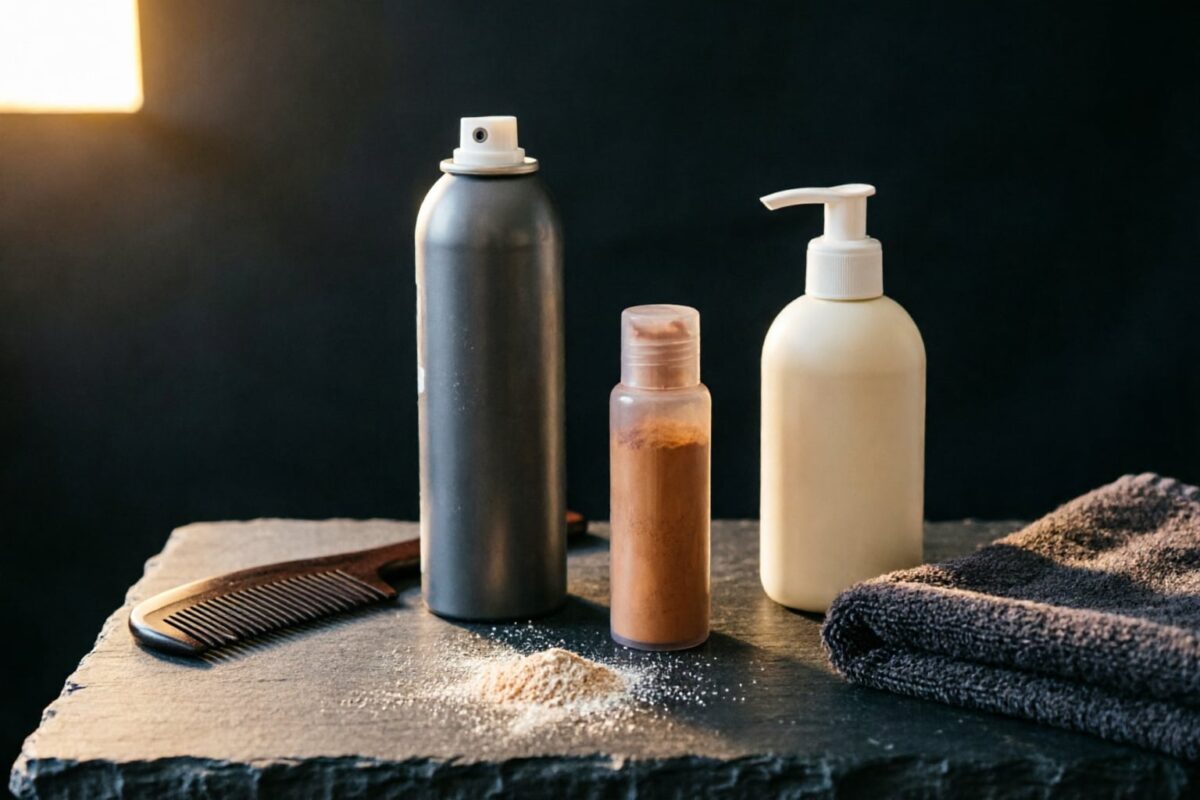
Dry shampoo is a short-term oil fix, not a replacement for washing. That distinction is easy to lose when the category promises clean roots, volume, texture, and another day between showers. The right formula can make second-day hair easier to style. The wrong one leaves a visible cast, gritty roots, or a scalp that feels worse than it did before.
Allure gave Color Wow’s Insta-Wow Advanced Dry Shampoo a 2026 Best of Beauty Award and described it as an aerosol that absorbs oil and sweat without a white cast or gritty buildup. That is useful product context, but it does not mean every aerosol is equally light or every shopper needs the same price point. Formula type, tint, fragrance, nozzle, and application style still determine whether the product works for your hair.
Dry shampoo uses powders or other oil-absorbing materials to reduce the look and feel of oil at the roots. It can add temporary texture and make hair easier to style. It does not remove dead skin cells, sweat, microorganisms, or all product residue the way water and shampoo can. The AAD states that regular shampoo and water are the only way to clean the hair and scalp, and that dry shampoo can accumulate if it is not washed out.
That does not make dry shampoo useless. It makes it a between-wash tool. Use it when washing is genuinely inconvenient, when styling needs a little more grip, or when a clean wash would be too frequent for the hair type. Do not use it to postpone a wash indefinitely because the roots look acceptable from a distance. Scalp comfort remains the limit.
Compare the Main Formula Types
| Formula type | What it does well | Main tradeoff | Best starting point |
|---|---|---|---|
| Aerosol spray | Fast, even distribution at the roots | Can leave visible powder if sprayed too close or not worked through | Fine or straight hair that wants quick refresh and volume |
| Tinted aerosol | Helps reduce a pale cast on dark hair | Tint can transfer or look uneven if the color match is poor | Dark hair that regularly shows white residue from clear powders |
| Loose powder or shaker | Precise placement and easy travel format | Requires more blending and can be easy to overdose | Small areas, travel, or users who dislike aerosol texture |
| Foam or mousse | Easier to distribute through lengths and curls | Can feel wet and may add styling hold | Thicker, curly, or coily hair that struggles with root powder |
Color Wow’s 2026 award is a reference point for the aerosol category. Allure reports that its microcrystalline rice starch absorbs oil and that the formula is designed not to leave a white or gritty trace. If you already dislike aerosol texture, an award does not solve that preference. Choose the format that matches the application you can perform evenly.
Fragrance is another decision point. The AAD notes that a person whose hair or scalp feels parched rather than fresh may want a fragrance-free dry shampoo. Scent can make a product pleasant to use, but a strong perfume is not a sign of cleaning power. If the scalp is reactive, simplify first and introduce one fragrance-free option at a time.
Apply It Without Creating Build Up
Read the package directions and follow the distance and wait time. Shake an aerosol as instructed, spray or shake the product into the oily areas, let it sit for the stated time, then massage or brush it through. The AAD notes that brushing or combing out the product is what helps remove oil. Leaving the powder visible on the surface is not the finished result.
Use less than you think you need. A concentrated burst at one spot can create a pale patch that is harder to blend than a light application over the whole oily section. Work in sections and keep the product close to the roots rather than coating the lengths. For tinted products, test on a small hidden area first and check clothing afterward.
Wash the hair with regular shampoo and water regularly enough to remove the accumulated product. The AAD stresses that dry shampoo should not replace actual washing. If the scalp becomes itchy, flaky, or coated, stop using the dry shampoo until the scalp returns to baseline. The dandruff guide can help distinguish scalp flaking from product residue.
Who Should Skip Dry Shampoo
Skip it when the scalp is painful, inflamed, broken, or actively infected. Avoid using dry shampoo to cover persistent flakes, sores, or hair loss. People with breathing sensitivity should use loose powder or aerosol products in a ventilated space and follow the label; the goal is to avoid inhaling a visible cloud. If a product causes coughing, wheezing, or eye irritation, stop using it.
Do not use dry shampoo as a workaround for severe hair breakage. Friction from repeated brushing, scalp buildup, and rough application can make fragile hair look worse. The hair breakage guide explains how to tell snapped strands from ordinary shedding. The protein treatment guide is the next place to check if the hair feels stiff or brittle.
For curly or coily hair, a root powder may be difficult to distribute without disturbing the curl pattern. A foam, mousse-like formula, or a toner specifically designed for the hair color may be easier to use. The texture of the product should support the way you style the hair, not force a new technique every time you need a refresh.
A Sensible Buying Rule
Start with the smallest size that lets you test the nozzle, tint, fragrance, and finish. A product that looks invisible in a photograph may look chalky in daylight. A tinted formula may be invisible on one hair color and obvious on another. A powder may be easier to control at the roots, while an aerosol may be faster on a large section of straight hair.
Set a realistic use case: gym-to-dinner, travel, fine hair that needs volume, or dark hair that shows white residue. Buy for that job. Color Wow’s award makes it a strong reference for an aerosol that is intended to disappear into the hair, but it is still an optional premium choice. The best dry shampoo is the one you can apply evenly and remove with a normal wash routine.
The decision rule: choose the format that matches your hair texture, test tint and fragrance in daylight, apply less than you think you need, work it through, and wash it out with real shampoo and water. Dry shampoo is a between-wash tool, not a scalp treatment or a replacement for hygiene.
Updated November 5, 2026. Written and edited by the BeautyPick Lab editorial team. This article summarizes cited public guidance and a cited 2026 review and does not represent firsthand testing.
Sources
- American Academy of Dermatology. Dry Shampoo: Dermatologists’ Tips for Getting Your Best Results.
- Allure. Color Wow Insta-Wow Advanced Dry Shampoo Review. October 9, 2026.
- American Academy of Dermatology. Tips for Healthy Hair.
