
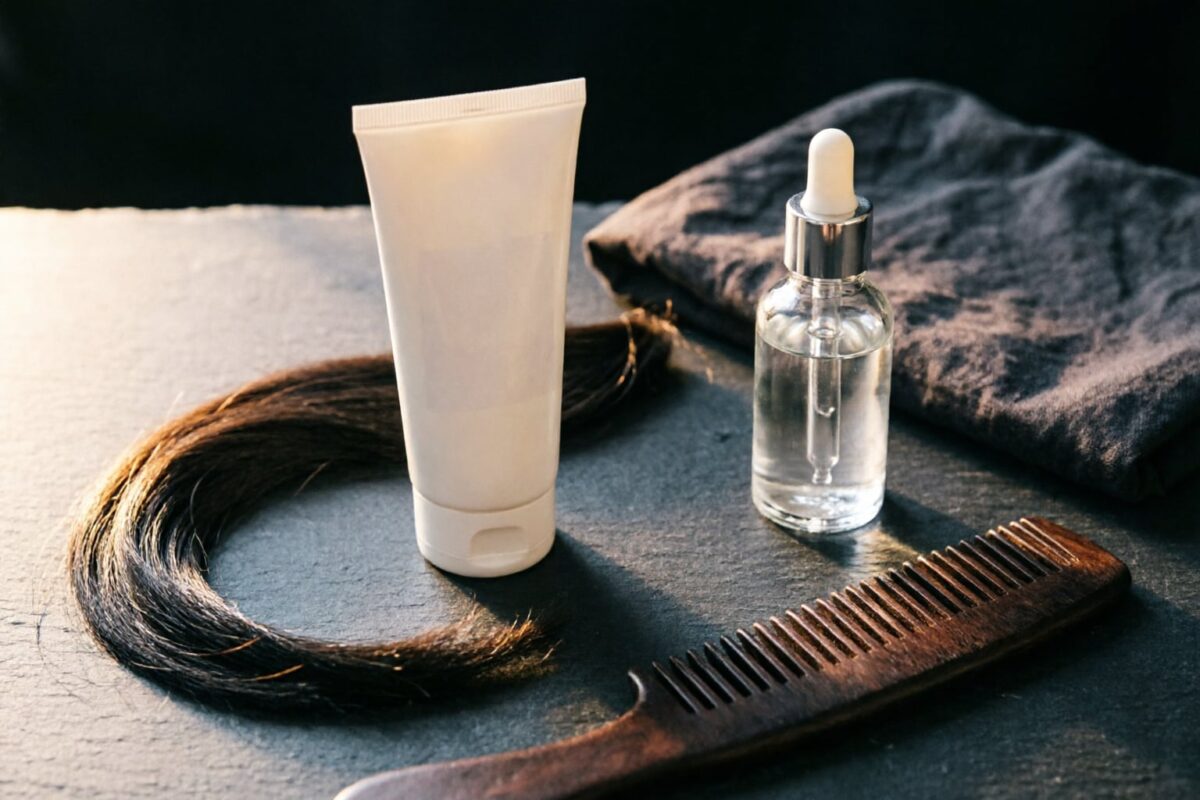
Protein overload is a popular hair-care term, not a standardized medical diagnosis. It usually describes hair that feels stiff, rough, or brittle after repeated protein-rich treatments, especially when those treatments are layered with heat styling or chemical services. The sensation can be real even when the label is imprecise. The difficulty is that the same symptoms can come from heat damage, bleach, tight styling, hard brushing, or simply too many products.
A protein treatment can be useful when the hair shaft has been weakened and the formula is used according to its directions. It cannot permanently repair a split end, replace conditioner, or make damaged hair indestructible. A sensible approach is to decide whether the problem is loss of strength, loss of moisture and flexibility, or mechanical breakage. That distinction is more useful than trying to diagnose an “overload” from a social-media checklist.
What the Term Can and Cannot Tell You
Hair is built largely from keratin, and cosmetic proteins or peptides can temporarily adsorb to the surface or fill microscopic gaps. A 2026 laboratory study in the International Journal of Cosmetic Science evaluated a designed peptide for keratin strengthening. That research is relevant to how protein-based ingredients may support hair, but it does not establish a universal threshold at which every head of hair becomes “overloaded.”
There is also no standard test for protein overload. A product that makes hair feel stiff may contain film-forming polymers, strong conditioning agents, or little protein at all. Product buildup, hard water, high heat, and chemical processing can create a similar coated or rough texture. Read the ingredient list, but do not assume the word protein alone explains the result.
| Observation | Possible explanation | Useful next check |
|---|---|---|
| Hair snaps before it stretches | Weakness, chemical damage, heat damage, or a stiff coating | Compare a shed strand with a broken end and review recent treatments |
| Hair feels dry but also coated | Product buildup or too many conditioning layers | Clarify once, then reassess before adding another treatment |
| Short broken pieces around the crown | Mechanical damage or tight styling | Check brushes, elastics, pillow friction, and repeated heat placement |
| Scalp flakes with normal hair lengths | Scalp flaking rather than hair-shaft damage | Review washing routine and dandruff guidance |
A strand test is not a laboratory result, but it can help you slow down. Take a clean shed hair and gently stretch it. Healthy hair has some elasticity; hair that snaps immediately is more likely to need gentler handling, not more pulling. Do not repeatedly test a curl or coil by yanking it. The goal is observation, not force.
Compare Protein and Moisture Products
Protein products are formulated differently. A hydrolyzed protein or peptide serum is not the same as a thick mask, a bond-building treatment, or a leave-in conditioner. Some are designed for short contact and others remain on the hair. Follow the manufacturer’s frequency and processing instructions. More product or longer contact is not automatically stronger.
A moisturizing conditioner is not the opposite of a protein treatment. Conditioning ingredients can soften the feel and improve combing, while a protein ingredient may support surface strength. The right balance depends on the hair’s current feel and the reason it is damaged. If a protein mask makes hair easier to comb and less likely to snap, it may be useful. If it makes hair wiry and difficult to detangle, stop repeating it and review the rest of the routine.
Clarifying can help reveal what is actually happening when buildup is suspected. Use a clarifying shampoo once according to its label, condition the mid-lengths and ends, and evaluate the hair after it dries. Do not turn clarifying into a daily habit. The dandruff guide covers scalp flaking, which needs different treatment from a damaged hair shaft.
A Practical Reset Sequence
Pause extra protein treatments for two to four washes if the hair feels stiff or rough. Keep shampoo, conditioner, and leave-in products simple during that period. Clean the hair gently, apply conditioner where the hair needs slip, detangle with a wide-tooth comb, and let the hair dry without aggressive rubbing. Avoid adding another treatment until the baseline is clear.
The AAD recommends washing according to hair type and oiliness, applying shampoo to the scalp, conditioning as needed, and being gentle with wet hair. It also advises limiting high heat and using a heat protectant. Those steps matter because a protein product cannot compensate for a curling iron held against the same section every day.
When you reintroduce a protein product, use one item at a time. Note whether combing becomes easier, whether the hair remains flexible after drying, and whether breakage changes over the next few washes. A treatment that only feels impressive while wet has not solved enough. If the product makes the hair worse, remove it from the rotation rather than trying to balance it with an overload of conditioner.
Who Should Skip Protein Treatments
Skip a new protein treatment when the scalp is inflamed, the hair is actively breaking in clumps, or the cause of hair loss is unclear. A protein cosmetic is not a treatment for thyroid disease, iron deficiency, alopecia, or a scalp infection. Sudden or patchy hair loss, pain, scaling, or scalp redness should be assessed by a board-certified dermatologist. The hair breakage guide helps separate snapped strands from shedding.
People with very fine or low-porosity hair may prefer a lightweight leave-in or occasional short-contact treatment. People with fragile chemical-processed hair should ask the professional handling the service before layering protein products at home. Products marketed for salon or professional use may have different instructions and should not be treated like ordinary conditioner.
Dry shampoo does not repair hair and can add friction if it is allowed to build up. The 2026 dry shampoo comparison explains how to use these products between real washes. Keep the goal modest: reduce damage, preserve flexibility, and avoid stacking treatments that make the next wash harder.
The decision rule: call it “protein overload” only as a temporary description, not a diagnosis. Compare stiffness with breakage, review heat and chemical services, clarify once if buildup is likely, and reintroduce one protein product with a clear observation period. Hair that is losing elasticity or breaking rapidly needs a root-cause review, not another mask.
Updated November 5, 2026. Written and edited by the BeautyPick Lab editorial team. This article summarizes cited public guidance and laboratory research and does not represent firsthand testing.
Sources
- American Academy of Dermatology. Tips for Healthy Hair.
- Rha CS, et al. Bio-active Designed Peptide for Hair Keratin Strengthening. International Journal of Cosmetic Science, 2026.
- American Academy of Dermatology. Hair Styling Without Damage.
