
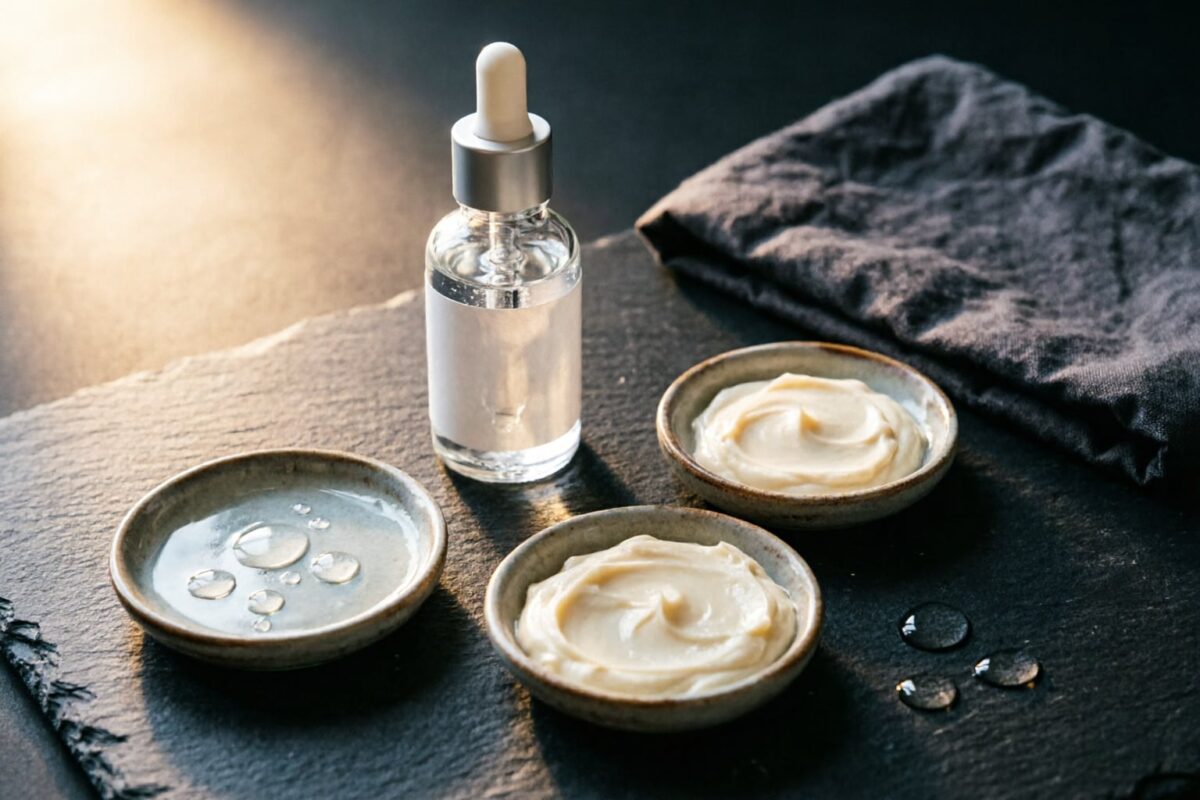
Hyaluronic acid serums can add a useful water-binding layer, but they do not replace moisturizer. Allure’s November 9 report highlights formulas that pair hyaluronic acid with glycerin, panthenol, ceramides, or multiple molecular forms, and advises applying the serum to slightly damp skin before sealing it with moisturizer. That sequence matters more than the word “hydration” on the bottle.
The serum should match the skin underneath it. A very dry face may need a richer cream or ointment after the serum; oily skin may prefer a lightweight gel-cream that does not pill under sunscreen. Fragrance, tackiness, and the number of other actives in the routine also affect whether the product is comfortable enough to use consistently.
What Hyaluronic Acid Can and Cannot Do
Hyaluronic acid is a humectant, meaning it attracts and holds water. Sodium hyaluronate is a related salt form commonly listed on ingredient labels. Different molecular weights may feel different on the skin, but a longer ingredient name is not proof that a formula will stay hydrated for longer. The finished product also depends on glycerin, emollients, occlusives, preservatives, and the cream applied over it.
Allure describes several 2026 formulas as lightweight, fragrance-free, or comfortable for sensitive skin, but those descriptions are not universal guarantees. A serum can still sting if the surrounding routine contains too many exfoliating acids or if the skin barrier is already irritated. The AAD recommends choosing a moisturizer that suits the skin and feels comfortable enough to use consistently, not simply the richest or most complicated option.
The AAD describes humectants, emollients, and occlusives as different parts of moisturizing. A hyaluronic acid serum is primarily the humectant step. Very dry skin may still need emollients to soften the surface and occlusives to reduce water loss. If the face feels tight again within minutes, the problem may be the missing sealing step rather than the serum itself.
Compare Serum Textures and Additions
| Formula direction | Likely best for | Main tradeoff | What to check |
|---|---|---|---|
| Lightweight HA plus glycerin | Oily or combination skin that dislikes heavy layers | May need a separate cream to seal it in | Pilling under sunscreen and makeup |
| Multiple HA forms | Readers who want a layered hydrating feel | More ingredients do not automatically mean longer hydration | Texture, fragrance, and how the skin feels after two hours |
| HA plus ceramides or panthenol | Dry or easily irritated skin seeking barrier support | Can feel richer or less compatible with oily skin | Full ingredient list and sensitivity history |
| HA plus exfoliating acids | Not a default choice for sensitive or already-treated skin | Adds another active and another irritation risk | Frequency, concentration, and duplicate acids elsewhere |
Allure’s edit includes lightweight and richer options, including formulas with several humectants or barrier-supporting ingredients. Use those examples to compare texture and positioning, not as proof that every skin type will respond the same way. The ingredient list should explain what the product adds that your current moisturizer does not.
Build the Layer in the Right Order
Cleanse gently, leave the skin slightly damp, apply a small amount of serum, and follow with moisturizer. If the serum becomes sticky, reduce the amount instead of adding more water. A face mist can add a little moisture, but it should not replace the leave-on moisturizer. The dry-skin face wash guide explains how a stripping cleanser can make any hydrating layer feel ineffective.
For daytime, allow the serum and moisturizer to settle before sunscreen. If makeup pills, apply less product or simplify the layers. The glowy sunscreen guide can help pair a dewy serum with a sunscreen finish that does not make the face look wet. At night, a cream or ointment may be a better final layer on dry areas such as the cheeks.
Do not introduce a serum, a new exfoliant, and a new retinoid in the same week. Keep a short observation period. If the skin stings, turns red, or becomes flaky, remove the newest product and return to a simple moisturizing routine. The dry versus dehydrated skin guide helps separate a temporary water-deficient feeling from an ongoing dry-skin pattern.
A practical sequence is: gentle cleanser, damp skin, hyaluronic serum, moisturizer, then sunscreen in the morning. Give the routine a week before changing another variable. If the skin feels comfortable but still looks flaky, the issue may be texture and emollient level rather than a need for more humectant.
Do not wait for the serum to dry completely before applying moisturizer. Once the face feels tight, the useful window may already have passed. A pea-sized serum layer is usually easier to control than a dropper filled to the top. If the product foams, pills, or turns milky when rubbed, use less or check whether an earlier product in the routine is interfering.
Who Should Skip or Choose Differently
Skip a new hyaluronic serum when your current moisturizer already provides enough hydration and the added layer causes pilling, tightness, or irritation. Also skip formulas with fragrance or exfoliating acids if those ingredients have caused stinging. The skincare ingredients guide can help identify duplicated humectants and active ingredients.
People with eczema, persistent redness, painful dryness, or an active rash should not try to solve the problem with more serum layers. A board-certified dermatologist can distinguish dryness from an inflammatory condition and recommend treatment. A cosmetic serum is not a drug and does not repair every type of skin damage.
The decision rule: choose one light or barrier-supporting texture that matches your skin, apply it to damp skin, seal it with a moisturizer, and stop if the extra layer makes the routine less comfortable. Hydration should feel stable after two hours, not only while the serum is still wet.
Updated November 10, 2026. Written and edited by the BeautyPick Lab editorial team. This article summarizes cited public guidance and editorial coverage and does not represent firsthand testing or medical advice.
Sources
- Lee, Christa Joanna, and Lily Wohlner. 9 Best Hyaluronic Acid Serums 2026 for Dry, Dehydrated Skin. Allure, November 9, 2026.
- American Academy of Dermatology. How to Pick the Right Moisturizer for Your Skin.
- American Academy of Dermatology. Dermatologists’ Top Tips for Relieving Dry Skin.
