
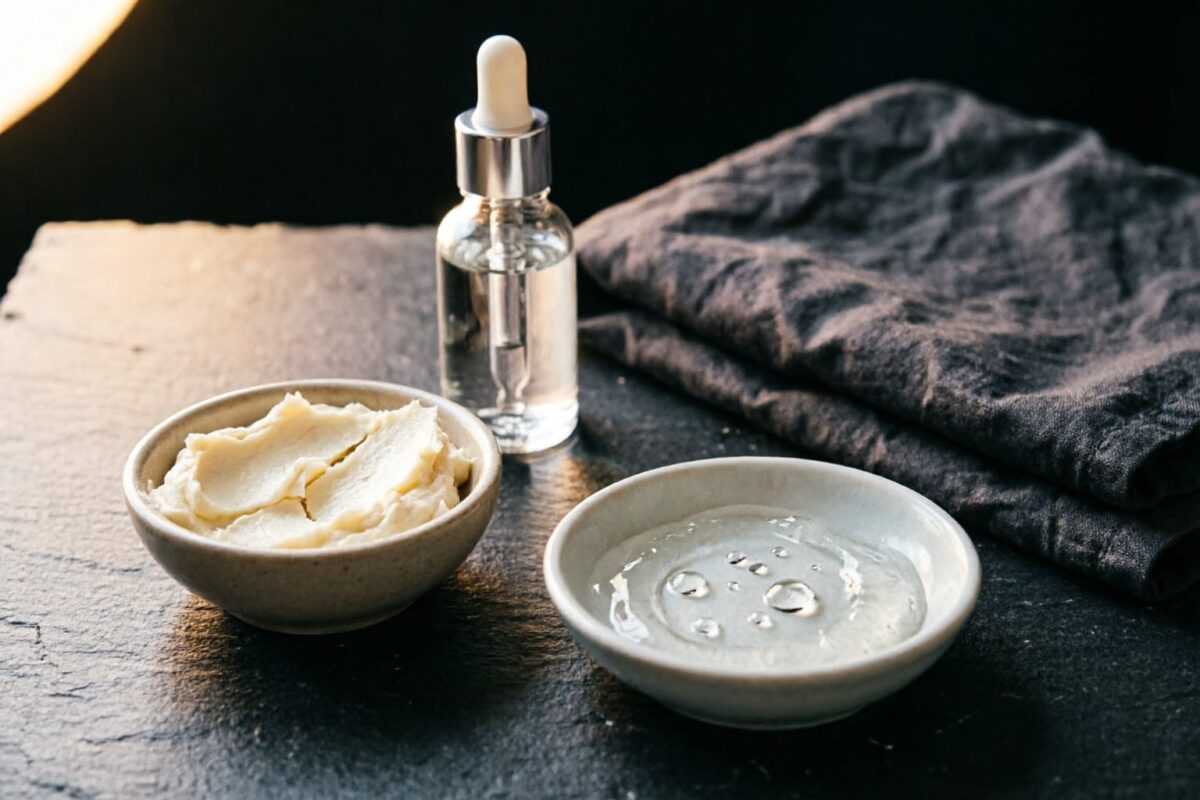
Dry and dehydrated are often used as if they mean the same thing. They can produce a similar sensation of tightness or rough texture, but the terms point to different skin-care strategies. Dry skin generally describes skin that lacks oil and has trouble holding on to moisture. Dehydrated is an everyday term for skin that temporarily lacks water. The two problems can overlap, and neither label replaces an actual diagnosis.
The practical difference matters when shopping. A rich cream may soothe dry skin while feeling suffocating on skin that is oily but temporarily parched. A lightweight hydrating layer may help water-deficient skin but disappear too quickly on someone who also needs barrier support. The goal is to match texture and ingredients to the pattern you observe, not to buy an entirely separate routine for every new label.
What Dry and Dehydrated Usually Mean
The American Academy of Dermatology describes dry skin as skin that can look rough, scaly, or cracked and may feel itchy. Moisture loss and outside factors such as dry air, harsh cleansers, and long hot showers can make it worse. People with dry skin often benefit from limited bathing time, lukewarm water, a gentle cleanser, and moisturizer applied soon after washing.
Dehydrated is less standardized. In cosmetic language, it usually means the skin has a lower water content and can feel tight even when it still produces oil. It may look dull, show more visible fine lines, or feel simultaneously oily and uncomfortable. The term is useful for describing a temporary pattern, but it is not a formal skin type. Persistent redness, pain, severe flaking, or cracking should be assessed by a dermatologist.
| Pattern | What you may notice | First thing to test |
|---|---|---|
| Dry skin | Rough patches, visible flaking, a stinging sensation, or cracked lips and hands | Gentler cleansing, shorter lukewarm showers, and a cream with emollients or occlusives |
| Dehydrated skin | Tightness, dullness, more visible fine lines, or oiliness alongside a parched feeling | Hydrating layers such as glycerin or hyaluronic acid, followed by a moisturizer suited to your oil level |
| Both at once | Oiliness in some areas, flaking in others, or a compromised-feeling surface | Separate the face and body decisions; use lightweight hydration where needed and richer support only on dry areas |
The table is a starting point, not a diagnostic test. Weather, medication, health conditions, hormones, exfoliation, and product reactions can all change what the skin is doing. A label that feels accurate one week may be incomplete the next.
Read Ingredients by Function
Humectants attract water. Common examples include glycerin and hyaluronic acid. Emollients soften and smooth the surface, while occlusives create a sealing layer that helps reduce water loss. Ceramides are lipids that can support the barrier. A product does not need every category to be useful, and a long ingredient list is not automatically better than a short one.
The AAD recommends choosing a moisturizer that fits the skin and feels comfortable enough to use consistently. For very dry skin, an ointment or cream may be more effective than a lotion, which can contain more water and feel less sealing. Someone with an oily but tight-feeling face may prefer a fluid or gel moisturizer with humectants, then add a small amount of a richer product only where flaking occurs.
Do not assume a “hydrating” cleanser can replace moisturizer. The dry-skin face wash guide explains why rinse-off products have a limited role. The moisturizing body wash guide applies the same idea to the shower. Cleansing should preserve comfort; leave-on products do more of the sustained work.
Build a Test Instead of a Shopping Spree
Change one thing for seven to ten days. Start with the simplest variable: water temperature, cleansing frequency, exfoliation, or moisturizer. If the face feels tight immediately after washing but comfortable after moisturizer, the cleanser may be too stripping. If it feels oily within an hour but still tight, the texture may be too heavy or the surrounding routine may be over-cleansing.
A practical sequence is: use a gentle cleanser, pat rather than rub dry, apply a thin hydrating layer if needed, seal with moisturizer, and reapply a small amount to persistently dry areas during the day. Avoid layering several strong exfoliating acids at once. If a product burns, stop using it. Cosmetic tingling is not proof that a product is working.
Skip a new “hydration” product when the routine already contains several moisturizers and the skin keeps worsening. More layers can increase irritation without restoring the barrier. The skincare ingredients guide can help you identify duplicate humectants and avoid buying three products that perform nearly the same function.
Who Should Adjust Course
People with eczema, persistent rash, painful cracking, or skin that stings with many products should not try to diagnose the pattern through product labels. The same applies to someone who develops swelling, hives, or widespread redness. A board-certified dermatologist can distinguish common dryness from an inflammatory condition and recommend treatment that a moisturizer cannot provide.
Record what happens after cleansing and again two hours later. That simple timeline often separates a product that is too stripping from one that is not sealing enough. Morning and evening routines can also need different weights; a light gel may be sufficient before makeup, while a richer cream suits a cold bedroom. Keep the comparison small enough to interpret.
If the skin starts feeling better but looks greasy, use the rich product only on the dry areas and keep the rest of the face light. If it feels comfortable but begins to flake again by evening, add moisture before adding another active ingredient.
The decision rule: treat dry skin with gentle cleansing and barrier-supporting moisturizers; treat temporary dehydration with light humectant hydration and a suitable seal; stop changing products when the pattern points to irritation or disease. The difference is useful only when it simplifies the routine.
Updated November 5, 2026. Written and edited by the BeautyPick Lab editorial team. This article summarizes cited public guidance and does not represent firsthand testing or a medical diagnosis.
Sources
- American Academy of Dermatology. Dermatologists’ Top Tips for Relieving Dry Skin.
- American Academy of Dermatology. How to Pick a Moisturizer.
