
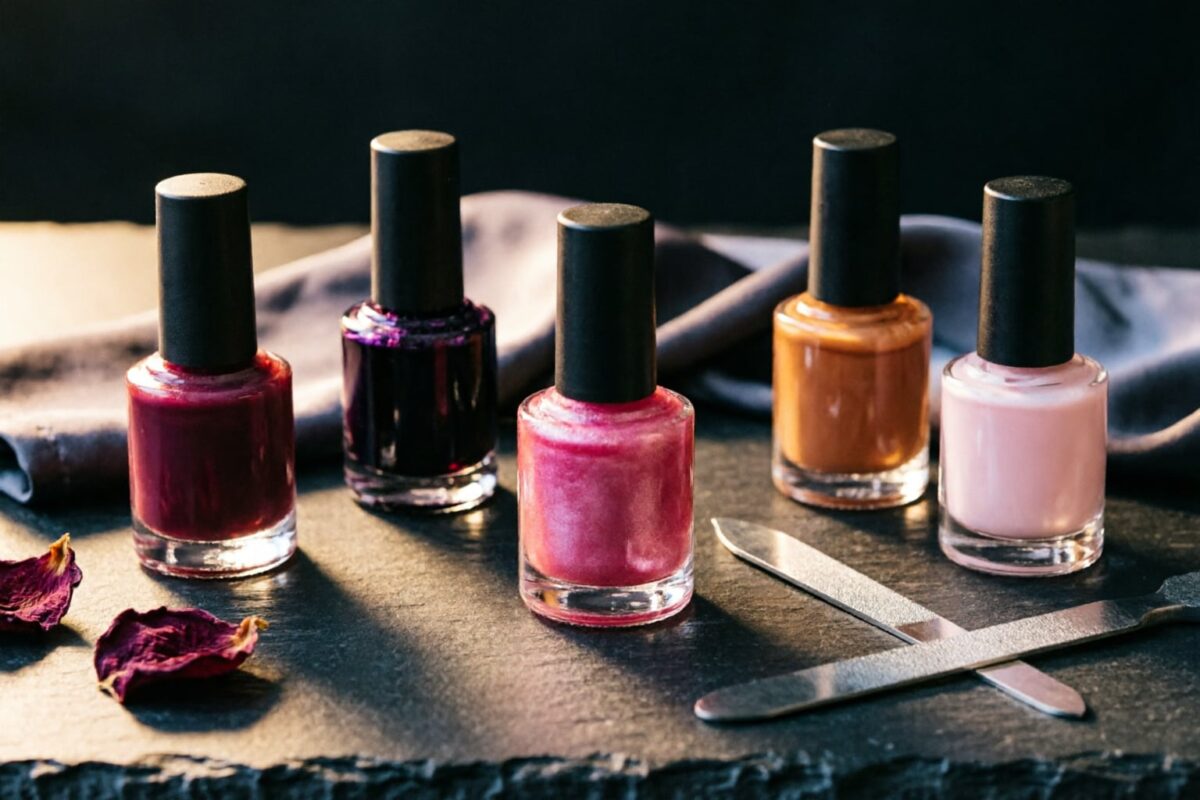
OPI has reissued seven shades from the 1990s and 2000s as part of its Most Requested Collection. Who What Wear’s November 1 report identifies a range that moves from a milky pastel and caramel brown to shimmering black-purple, fuchsia, burgundy, and crimson. The appeal is partly nostalgia, but the practical question is simpler: which returning color will actually suit your hands, wardrobe, and nail routine?
A familiar shade name does not guarantee an easy match. Finish, contrast, and the condition of the nail all influence the result. The useful approach is to choose by effect first, then confirm the polish works with the nails you have now. A dark cream can look polished on short nails, while a pale milk tone can reveal ridges or staining more readily. None of that makes either shade better; it changes when each one makes sense.
What Came Back and Why It Matters
The collection covers several distinct color families. Every Month Is Oktoberfest, a vampy purple first released in 2012, brings the deepest cool tone in the group. Lincoln Park at Midnight is a shimmering counterpart to OPI’s black-purple Lincoln Park After Dark and dates to 2006. It’s All Greek to Me, originally from 2004, is described as fuchsia with a hint of gold-flecked sparkle.
The lighter options have a different kind of usefulness. Mod About You Pastel, released in 2008, is presented as a milkier version of the original Mod About You. Route Beer Float combines caramel brown with a soft vanilla-cream note and was first released in 1997. Vampire State Building is a burgundy from 2000, while Vodka & Caviar is a crimson shade first released in 2007.
The timing gives these colors another layer of relevance. Brown, burgundy, and dark purple already fit the colder-weather palette, and the reds can carry into holiday dressing. The winter 2026 fashion color guide covers a similarly broad range. Matching a polish to one accent in your wardrobe can create a deliberate link, but the same bottle should still work when the outfit changes.
Judge the Shade in the Right Light
Start with contrast against your skin. Very pale polish can look crisp against deeper skin and nearly invisible against a pale hand; deep charcoal purple can create a strong edge on either. That is not a rule about who can wear the color. It is a reminder that the same finish produces a different visual boundary at the cuticle.
Look at the polish in daylight before committing to a full application. Store lighting can make crimson look warmer, black-purple look flatter, and milky pink look cleaner than it will at home. Paint one nail, let it dry, and check it near a window and under the lamp you use most. This is especially useful for shimmer. A dense sparkle can read festive in a bright room and almost solid in low light.
Finish matters as much as hue. Cream formulas look more uniform, which makes them forgiving with short nails and simple clothes. Shimmer reflects light and can disguise subtle surface unevenness, though it can also emphasize ridge texture if the coat is very thin. A milky pastel is the least forgiving category in this group because contrast between the nail and polish is low. Base coat and careful layering matter more there.
Consider maintenance before buying a dramatic shade. Dark polish can show edge wear, while pale milk color can show chips less obviously. Shimmer may hide small flaws, but it can take more care to remove. Think about the week ahead rather than the moment of purchase: a color that needs repair before an important morning is less useful than one that survives ordinary typing, cooking, and hand washing.
Choose One Role for the Color
Give each new polish a job in your wardrobe. A deep purple or burgundy can serve as the strong color in an outfit built from charcoal, gray, denim, or black. Crimson is brighter and more direct, so it works with simpler clothing or as the only saturated detail. Caramel brown is quieter and can echo leather accessories or gold-toned jewelry. Milky pink is best treated as a clean neutral rather than a statement.
One bottle is enough when it supports at least three regular combinations. A burgundy may suit black trousers, dark denim, and a gray knit. Caramel may connect with brown boots, cream, and olive. If a shade needs a new bag, dress, and lipstick to feel complete, it is a higher-risk purchase. The fall wardrobe essentials guide offers a useful wardrobe-first way to decide whether the color has a place.
Nail length changes the effect too. Dark polish often looks crisp on a short, rounded nail because the color edge is visible and controlled. A long almond shape gives crimson and black-purple a more dramatic line. Pastel and milk tones may benefit from a shorter, cleaner shape because the contrast is softer. Choose the shape you can maintain, not the one that only looks best in a salon photo.
Prep the Nail Before the Color
Healthy prep is more valuable than an extra coat of polish. The American Academy of Dermatology recommends trimming nails after a bath or shower, when they are soft, and filing in one direction rather than back and forth. It also advises leaving cuticles alone because they protect the nail root. Cutting or pushing them back can create an opening for bacteria and lead to infection.
The AAD recommends disinfecting nail tools monthly. Soak a small scrub brush in 70 to 90 percent isopropyl alcohol, scrub the clippers or scissors, rinse them in hot water, and dry them completely. That routine is especially relevant if more than one person uses the tools. Clean tools and an intact cuticle line are better preparation than trying to cover redness with a dark shade.
Moisturize after trimming to keep nails flexible, particularly when indoor heat is dry. Then remove old polish, shape lightly, and apply a base coat if staining or ridges are a concern. A practical sequence is: cleanse and dry the hands, trim or file only what is needed, moisturize the surrounding skin, wipe the nail plate, apply base coat, build color in thin layers, and finish with a top coat. Give each layer enough time rather than flooding the nail in one pass.
Skip a new polish when the problem is the nail itself. Persistent discoloration, a lifted nail, pain, swelling, or a change in texture or shape should be assessed by a board-certified dermatologist. The AAD notes that some nail changes are harmless, while others can signal an infection or another condition. A fashion shade can cover a surface temporarily, but it cannot correct a medical problem. For another practical color-selection framework, review the winter nail color guide.
The decision rule: choose the OPI reissue that complements at least three existing outfits and one repeatable nail shape, then judge it in daylight rather than by the archive name. Pair deep color with clean application and keep cuticles intact. A returning shade is worth buying when the color solves a current wardrobe need; nostalgia alone can leave another beautiful bottle sitting unused.
Sources
- McLintock, Kaitlyn. OPI Just Quietly Reissued 7 Iconic Nail Colors From the ’90s and Early-2000s. Who What Wear, November 1, 2026.
- American Academy of Dermatology. How to Trim Your Nails.
