
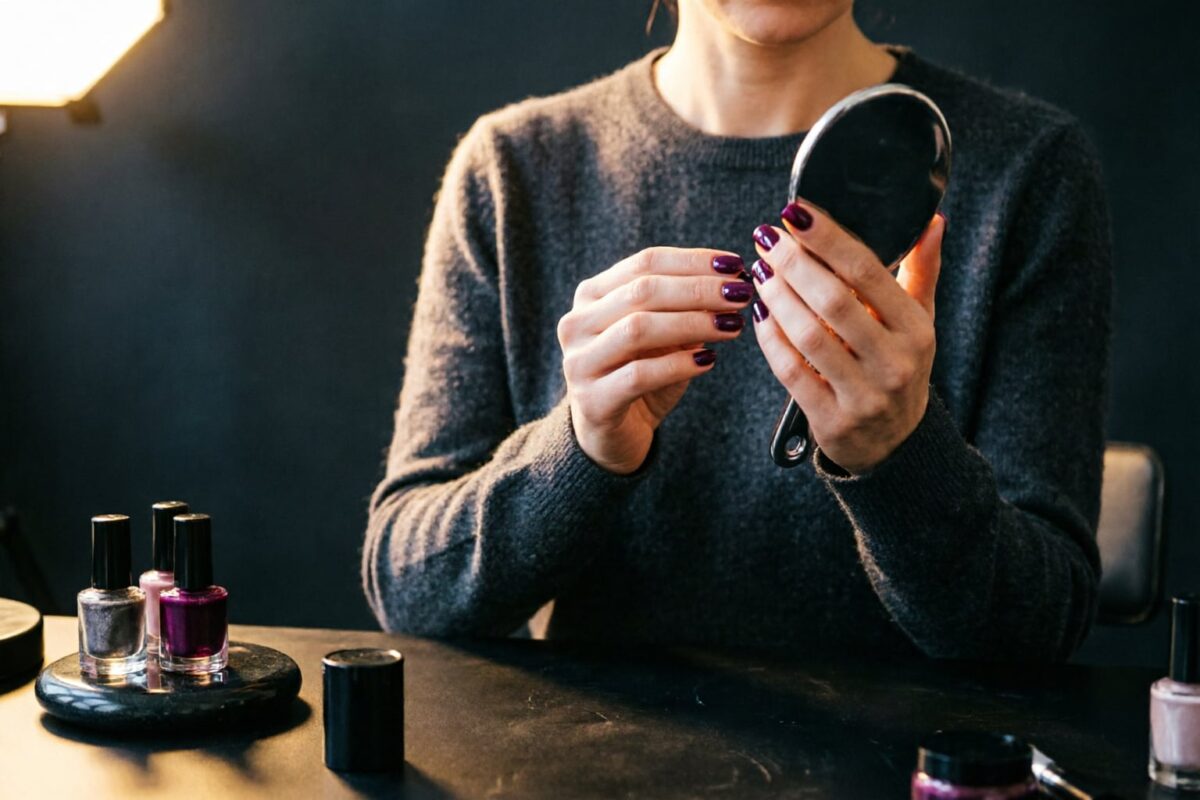
Winter nail color has moved away from the safe red-and-nude rotation. Recent US trend coverage points to a moodier palette built around moss green, antique gold, black cherry, and deep plum. The most useful takeaway is not that every statement shade belongs in your collection. It is that a dark polish can look polished rather than theatrical when the finish, application, and surrounding wardrobe work together.
Who What Wear’s October nail report describes several shades as darkly romantic: mulled merlot, black cherry, midnight plum, dark chocolate, rich emerald, and moss green. Separate Allure coverage points to glossy true black as another visible signal. Those are useful examples, not a mandate to wear all of them. The practical question is which one will survive your actual week.
Why Winter Nail Color Looks Different This Year
The strongest shift is depth with movement. Instead of flat creme colors, current reports emphasize shades that look almost black in low light and reveal red, green, purple, or gold when light catches them. That effect is easier to wear than a fully saturated color because the shade changes with the environment. It also photographs differently indoors and outside, which matters if you choose polish from social media photos.
There is also a practical seasonal reason for the darker direction. Winter clothing often uses a smaller palette of charcoal, camel, chocolate, burgundy, navy, and cream. A deep polish can repeat one of those colors instead of competing with it. Moss green works particularly well with olive, gray, and brown. Antique gold sits naturally beside camel and cream. A black cherry or plum reads cleaner against cool gray or true black than a bright spring pink might.
Start With the Finish, Not the Shade
Finish changes a color more than most shopping guides admit. A glossy black is graphic and reflective. A dense black cherry cream looks softer because the red and purple undertones break up the darkness. A sheer shimmer reflects light across the nail and makes a deep color less severe. A velvet cat-eye effect adds visible texture, but it also requires more skill and a magnetic polish.
For a first dark shade, choose a finish you can apply cleanly. A thin cream can be less forgiving than a slightly reflective polish because every ridge and cuticle edge becomes more visible. A sheer or satin finish hides small application mistakes, while high-gloss finishes show the surface of the nail more clearly. If you rarely paint your nails, a sheer shimmer or a medium-depth cream is usually the easier entry point than a true black.
A separate at-home manicure buying guide highlights the appeal of long-term wardrobe shades over novelty colors. That logic is worth borrowing even if designer polish is outside your budget. Buy one color you can wear with three outfits and one more experimental shade you genuinely want to try. A $34 bottle that is used twice is less efficient than a $10 bottle that becomes your default for six weeks.
The Palette That Fits Real Routines
Treat the season’s palette as a set of jobs rather than a ranking.
- Mulled merlot or black cherry: the easiest bridge between classic red and a darker winter shade. It works for offices, dinners, and neutral wardrobes, but choose thin layers because a heavy coat can make the nail look bulky.
- Midnight plum: a good option if black feels too graphic and bright purple feels too seasonal. The shade reads almost black at a distance, then shows purple in direct light.
- Dark chocolate: warmer and softer than black. It pairs naturally with camel, cream, rust, and denim, though a very yellow-toned brown can make the hand look washed out in cool lighting.
- Moss green: the most distinctive direction in the current reports. It is worthwhile if you wear olive, charcoal, and brown, but less versatile if your wardrobe is built almost entirely around black and cool gray.
- Antique gold or sheer shimmer: the lowest-commitment festive choice. Metallic texture adds interest without requiring a perfectly opaque base, and a single layer can work as a subtle finish.
If the goal is one polish for the next two months, start with a merlot, plum, or chocolate in a cream or satin finish. If the goal is a short holiday manicure, shimmer or antique gold gives you more visual change for less cost. Moss green is the best third purchase, not automatically the best first one.
Budget matters here. A seasonal color does not need a salon appointment to feel current. A simple, well-applied manicure at home can be enough. If you are also shopping for larger beauty sets this season, the same decision rule applies: buy the format you will actually use, not the most impressive packaging. Our guide to holiday beauty sets breaks that calculation down further.
Application matters as much as shade. Use two or three thin coats rather than one heavy layer, leave a small margin at the cuticle, and add a base coat to reduce staining from dark pigment. A shorter oval or rounded square is easier to maintain than a long stiletto if your nails bend or peel easily. If you need a faster routine, one coat of a deeper sheer shade still gives the current dark effect. The same principle is behind our five-minute makeup routine.
The Nail-Care Rules That Matter More Than Color
Color is the visible part of the decision; nail care determines whether it stays wearable. The American Academy of Dermatology recommends trimming fingernails almost straight across, then rounding the corners slightly with a file. It also advises filing in one direction, disinfecting tools monthly, and moisturizing after trimming to help keep nails flexible.
Leave cuticles alone. The AAD notes that cuticles protect the nail root, and cutting or pushing them back can create an opening for bacteria and other germs. That advice is especially relevant during a season of frequent polish changes. If a nail becomes painful, swollen, persistently discolored, or changes shape, a board-certified dermatologist is the appropriate next stop rather than another layer of polish.
Also remove polish if it begins to lift along the edge. Water can collect under a lifted coat, and repeatedly picking at the edge damages the surface of the nail. A clean removal and a fresh thin application take less time than trying to repair a patchy manicure.
Choose one dark shade that repeats a color already present in your wardrobe, one finish that suits how much time you will spend applying it, and one care habit that protects the nail underneath. For most readers, a plum, merlot, or chocolate cream will provide the easiest first upgrade. Add moss green or antique gold only when the shade fills a real gap rather than because it looks striking in a single photograph. The most useful winter color is not the darkest or the newest. It is the one that still looks deliberate after a week of work, weather, and ordinary hand washing.
Sources
- McLintock, Kaitlyn. From Moss Green to Antique Gold: The Best Mid-Autumn Nail Trends Are Straight Out of a Dark Fantasy Novel. Who What Wear, October 24, 2026.
- Nesvig, Kara. Hailey Bieber’s Glossy Black Nails Are Ready for Spooky Season. Allure, October 20, 2026.
- McLintock, Kaitlyn. The 25 Best Designer Nail Polish Shades of 2026. Who What Wear, October 25, 2026.
- American Academy of Dermatology. How to Trim Your Nails. Accessed October 26, 2026.
