
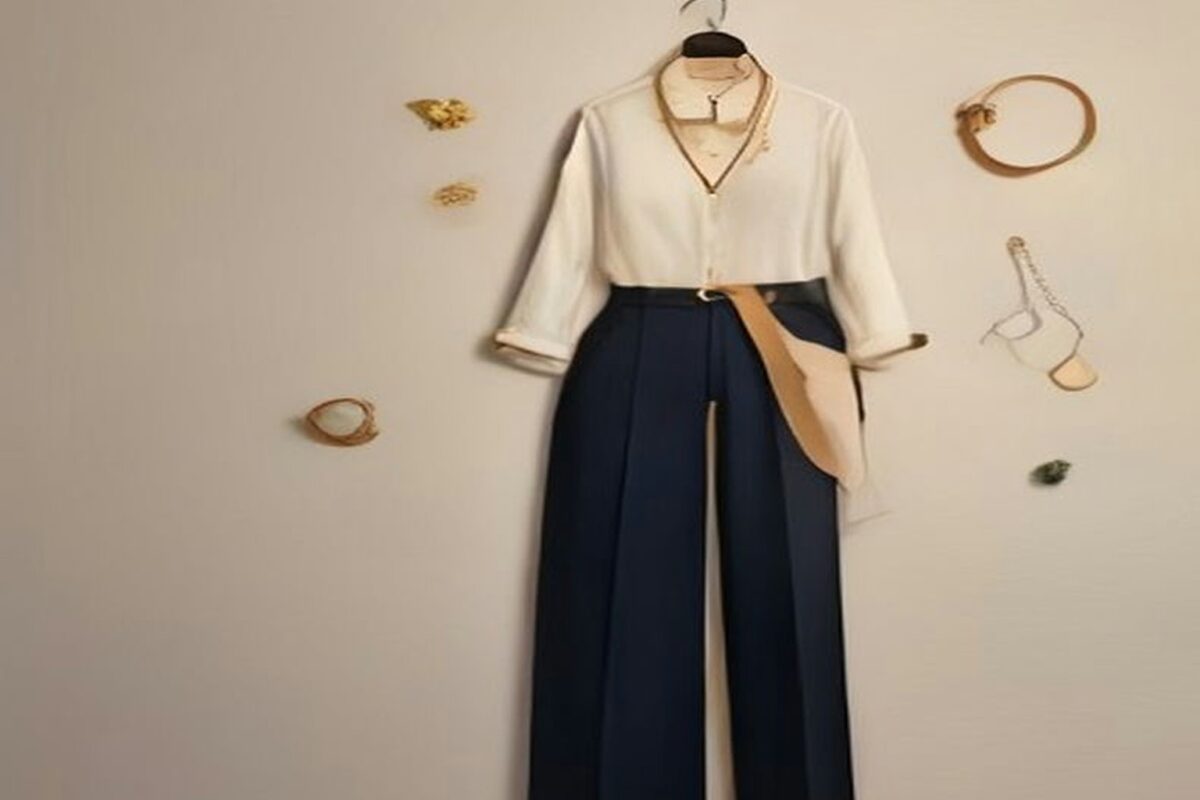
Wide-leg trousers are one of the most flattering and versatile pieces in a modern wardrobe, but they are also one of the most intimidating. Get it right and you look effortless and put-together. Get it wrong and you look like you are drowning in fabric. The difference comes down to proportion, length, and how you balance the volume.
This guide covers how to choose, fit, and style wide-leg trousers so they work for your body type, your height, and your wardrobe.
What makes a trouser “wide-leg”
The term covers a range of silhouettes, and knowing the difference matters because each one flatters a different body type.
- Palazzo: The widest cut, flowing from the hip to a very wide hem. Most dramatic, most forgiving on the lower body, but the hardest to balance on top.
- Wide-leg: A generous cut that is wide but not extreme. The most versatile option and the best starting point for most people.
- Relaxed or looser straight: A straight leg with extra room through the thigh and calf. Less dramatic than a true wide-leg but gives a similar effect.
- Flared or bootcut: Fitted through the thigh and knee, widening from the calf down. A different silhouette that creates length rather than width.
The one rule that overrides everything: length
More than any other garment, wide-leg trousers live or die by their length. A centimetre too short and they look like cropped pyjamas. A centimetre too long and they drag on the ground, pick up dirt, and make you look shorter.
The ideal length
- With flats: The hem should graze the top of the foot, covering the ankle but not dragging. This is the most practical length for daily wear.
- With heels: The hem should reach the instep of the shoe, almost touching the ground at the back. This creates maximum length and drama.
- Cropped (above the ankle): A deliberate style choice, not a mistake. This works best on mid-height to tall figures and pairs well with ankle boots or mules.
If you are between lengths, hem them to the flat-shoe length. You can always wear heels with slightly cropped trousers, but you cannot wear flats with trousers that are too long without them dragging.
The proportion principle: balance the volume
Wide-leg trousers add volume to the lower half of the body. The styling question is what to do with the upper half to create balance. There are two valid approaches, and they produce very different looks.
Option A: Fitted on top (classic balance)
A fitted or semi-fitted top creates contrast with the wide trousers, defining the waist and upper body while the trousers add movement below. This is the most universally flattering approach.
- A fitted fine-knit top or a tucked-in blouse
- A fitted t-shirt, tucked or French-tucked
- A cropped sweater or jacket that hits above the hip
- A blazer, structured and nipped at the waist
Option B: Oversized on top (modern, relaxed)
An oversized top with wide trousers creates a flowing, fashion-forward silhouette. This works best on taller frames and for fashion-conscious settings. The risk is looking swamped by fabric.
- An oversized blazer, structured enough to hold its shape
- A loose, tucked-in shirt with the front pulled out slightly
- A longline cardigan or duster
- A tucked-in tank with an open overshirt
The key to making the oversized look work is a defined waist. Use a belt, a tucked hem, or a top that is voluminous but cropped. Without a waist point, the silhouette becomes a column of fabric.
Where the trousers sit: rise and waistband
- High-waisted: The most flattering rise for most body types. It defines the natural waist, elongates the legs, and creates a clean line from hip to hem. Best paired with a tucked top or a cropped layer.
- Mid-rise: A more relaxed look that sits on the hips. Works well with a longer, untucked top that skims the body. Less dramatic elongation but more comfortable for daily wear.
- Low-rise: Rare in wide-leg cuts and generally unflattering, as it shortens the legs and emphasises the hip. Avoid unless the fit is exceptional.
Styling by body type
Pear shape (hips wider than shoulders)
Wide-leg trousers are excellent for this body type because the volume through the leg balances the hip width rather than fighting it. Choose a high-waisted pair that skims the hip without pulling at the side seam. Pair with a fitted or semi-fitted top that adds structure to the upper body, and add shoulder-defining layers such as a blazer or a structured jacket.
Apple shape (midsection wider than hips)
Choose a mid-rise with a flat-front waistband and avoid anything that buttons tightly at the natural waist. A fluid wide-leg in a drapey fabric skims the midsection rather than clinging. Pair with a longer, untucked top that skims the body, or a tunic-length shirt. Avoid cropped tops and tucked-in looks that draw attention to the waistband.
Hourglass shape (balanced bust and hips, defined waist)
High-waisted wide-leg trousers are ideal here because they showcase the waist. Choose a pair with a waistband that sits cleanly at the natural waist, and pair with a tucked-in top to emphasise the waist-to-hip ratio. A belt can add a finishing point if the waistband allows it.
Rectangular shape (bust and hips similar, less waist definition)
Wide-leg trousers create curves where there are none. Choose a high-waisted pair and pair with a tucked-in top to create a waist point. A belt or a waistband with detail draws the eye to the midsection and creates the illusion of a more defined shape.
Tall (above 170 cm)
Almost any wide-leg cut works. You can carry the most volume, from palazzo to cropped. Experiment with the oversized-on-top look, which tall frames can balance better than any other body type.
Petite (under 160 cm)
Choose a moderate wide-leg rather than a palazzo, and keep the length long enough to graze the shoe. A high waist is essential for leg elongation. Avoid cropped lengths, which can shorten the leg further. Pair with heels or pointed-toe flats to extend the line.
Shoe pairings that work
- Pointed-toe flats: The pointed toe extends the leg line beyond the foot. The most flattering flat option.
- Heels (block or stiletto): Heels add height and let the trousers fall longer, which elongates the whole silhouette. Block heels are more stable for walking in wide hems.
- Ankle boots: Work best with cropped wide-leg trousers or with a longer pair that covers most of the boot.
- Trainers: A modern, relaxed pairing. Choose a clean, minimal trainer rather than a bulky running shoe, which will look clumsy under wide fabric.
- Mules or slides: A sophisticated warm-weather option that shows the foot and balances the volume above.
Avoid round-toe shoes with long wide-leg trousers. The rounded shape cuts the leg line and can look heavy under the wide hem.
Fabric choices
- Wool and wool blends: The best all-round fabric. Holds shape, drapes cleanly, and resists wrinkling. Ideal for workwear.
- Linen and linen blends: Perfect for summer. The drape is softer and more relaxed, but wrinkling is part of the look.
- Tencel and lyocell: A beautiful fluid drape with a slight sheen. Reads as smart but feels like loungewear.
- Cotton twill: A more structured, heavier feel. Good for a tailored look, but can be stiff and unflattering if the fit is off.
- Silk or satin: For evening. The fluid drape is dramatic and elegant. Handle with care, as the fabric shows every snag.
Three outfit formulas to start with
1. The everyday smart (office to dinner)
- High-waisted wool wide-leg trousers in navy or charcoal
- A fitted fine-knit top, tucked
- A structured blazer, slightly cropped
- Pointed-toe flats or low block heels
2. The relaxed weekend
- Cotton or linen wide-leg trousers in a neutral tone
- A simple t-shirt, French-tucked
- An open overshirt or cardigan
- Clean minimal trainers
3. The evening look
- Silk or satin wide-leg trousers in black, jewel tones, or cream
- A tucked silk blouse or a fitted ribbed top
- Statement jewellery or a structured clutch
- Heels, pointed or strappy
Frequently asked questions
Are wide-leg trousers flattering on curvy figures? Yes, when the fit is right. The volume through the leg balances curvy hips. Choose a high waist, a fluid fabric that skims rather than clings, and a fitted top to define the waist.
Can I wear wide-leg trousers if I am short? Absolutely. Choose a moderate width rather than the widest cut, keep the hem long enough to graze your shoe, and pair with pointed-toe shoes to extend the leg line. High waist is essential.
What is the difference between wide-leg and flared? Wide-leg trousers are wide from the hip down, creating a column of fabric. Flared trousers are fitted through the thigh and knee and widen from the calf, creating a different shape that is more about length than volume.
Do wide-leg trousers make you look shorter? Only if the length or proportion is wrong. A high waist and a hem that grazes the shoe will elongate, not shorten. Avoid cropped lengths if you are petite.
Can I wear wide-leg trousers casually? Yes. In a softer fabric like linen or cotton, paired with a simple t-shirt and trainers, they are one of the most comfortable and stylish casual options available.
Final thoughts
Wide-leg trousers are worth the effort to get right. They are more comfortable than any other tailored trouser, they work for almost every body type when the proportion and length are correct, and they transition effortlessly from casual to formal. Start with a high-waisted pair in a neutral wool blend, hem them to the right length, and balance the volume with a fitted top. That one outfit will become a rotation favourite.
