
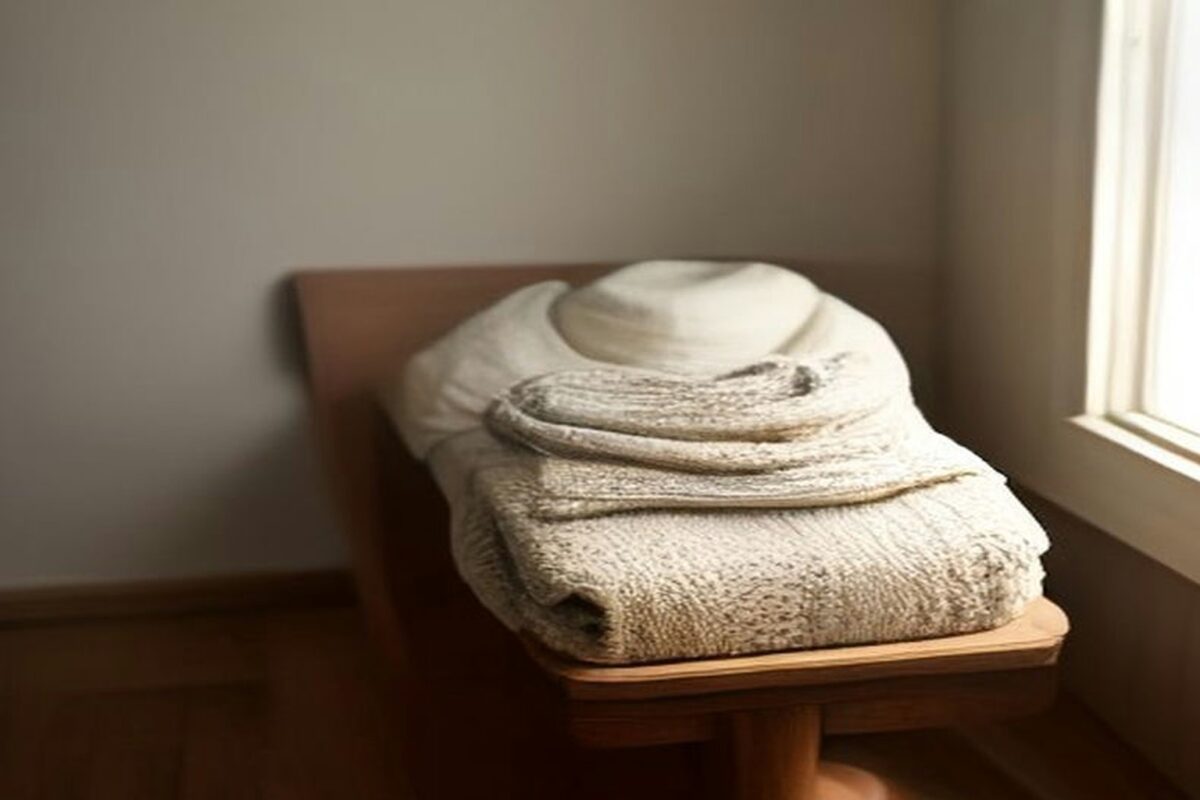
This season’s knitwear is not the layered, formless sweater dressing that carried us through the last few winters. The direction American designers have settled on for fall 2026 is more deliberate: sculptural silhouettes, heavy tactile texture, and a willingness to let one knit piece carry an entire outfit. Cozy, but with a shape.
The problem is that “sculptural knit” and “flattering” are not automatically the same thing. An oversized chunky knit photographed on a size-zero model can read as a shapeless sack on almost everyone else. The difference between the two is almost entirely in three decisions: proportion, texture weight, and what you put next to it.
Why This Season’s Knits Look Different
Three changes separate the current crop from what was on shelves two years ago.
Texture is the point. Cable knits, heavy ribs, bouclé, brushed mohair, and openwork stitches are all being used as the visual interest of a garment rather than as a background texture. A plain fine-gauge sweater is now the supporting piece, not the statement.
Shapes are exaggerated on purpose. Sleeves are wider at the cuff, shoulders are dropped further, hems are longer. Designers are treating a sweater more like outerwear — something with volume you wear over a base layer rather than something fitted to the body.
Colour has gone warm and muted. Chocolate brown, oatmeal, camel, deep burgundy, and charcoal are doing most of the work. Bright, saturated knits are rare this season, which actually makes styling easier — warm neutrals layer with almost anything.
The Proportion Rule That Fixes Everything
If you take one thing from this article, take this: one volume, not two.
An oversized knit needs a slim bottom. Wide-leg trousers, a full midi skirt, or baggy jeans paired with a chunky sweater produces a silhouette with no defined edge, and the body disappears inside it. The same sweater over straight-leg jeans, a slim column skirt, or tailored trousers reads as intentional volume rather than accidental bulk.
The reverse also holds. If you want to wear wide-leg trousers — which are also very much in this season — keep the knit fitted or cropped. Fine-gauge ribbed knits, cropped cardigans, and close-fitting turtlenecks all work with volume below.
| Knit piece | Pair with | Avoid |
|---|---|---|
| Oversized chunky cable knit | Straight-leg jeans, slim trousers, pencil skirt | Wide-leg trousers, full skirts |
| Fine-gauge turtleneck | Wide-leg trousers, pleated midi, tailored suiting | Nothing much — this is the most versatile piece |
| Cropped cardigan | High-waisted anything, wide-leg trousers | Low-rise bottoms |
| Long-line knit dress | Structured coat, knee boots | Volume on top as well |
Get the Neckline Right
Heavy knits add visual weight around the face, and the neckline is where that either works or backfires.
If you have a short neck or fuller face: skip the thick crew neck and the chunky turtleneck. A V-neck, a deep scoop, or a mock neck in a fine gauge gives length without adding mass. If you love the look of a turtleneck, choose a thin ribbed one and wear it with a long pendant, which breaks the vertical block.
If you have a long neck: turtlenecks and high crew necks are your best pieces this season. This is the one body-type note where the trend is genuinely in your favour.
How to Stop a Chunky Knit From Swallowing You
Half-tuck the front. A single front tuck into the waistband of your trousers does more for a chunky sweater than any other styling move. It creates a horizontal line at the hip, defines where your body is, and keeps the hem from cutting you off at the widest point.
Push the sleeves up. Showing forearm skin reduces perceived bulk dramatically. A chunky knit worn with the sleeves to the wrist can look heavy; the same sweater with sleeves pushed to mid-forearm looks styled. This is the cheapest fix in this entire article.
Choose a shorter hem than you think. The most common knitwear mistake is buying a sweater that ends at the widest part of the hip. Aim for a hem that hits at the high hip or just below the waistband. If a sweater is long, tuck it — do not let it hang.
Add a vertical line. An open long coat, a scarf worn long rather than wrapped, a pendant necklace, or a cardigan worn open all create a vertical line down the body that counteracts the horizontal width of a heavy knit.
The Three Pieces Worth Buying
If you are adding to your wardrobe rather than replacing it, these are the three that will carry the season and still be wearable next year:
- A fine-gauge merino turtleneck in a warm neutral. The most useful piece in this entire trend. Layers under blazers, wears alone with trousers, works with everything. Camel, charcoal, or chocolate.
- An oversized cable or rib knit in oatmeal or cream. The statement piece. Buy it deliberately oversized, and plan to wear it with a slim bottom.
- A cropped cardigan in a deep tone. Burgundy or forest green. Works with high-waisted trousers and wide-leg jeans, and functions as a light layer indoors.
Skip the novelty textures — the heavily brushed mohair and the extreme bouclé. They photograph beautifully and pill within a month, and they are the pieces that end up unworn at the back of the drawer by January.
Care Matters More Than Usual
Heavy textured knits are less forgiving than fine-gauge ones. Hand wash or use a wool cycle in cold water, dry flat rather than hanging (a wet chunky knit will stretch permanently on a hanger), and use a fabric comb to remove pills rather than a razor. Fold, never hang, for storage. A good cable knit should last a decade if you treat it like the investment it is.
The Bottom Line
Fall 2026 knitwear is about texture and shape rather than layers and volume — which is good news, because it is easier to wear well than it looks. Keep one volume per outfit, get the neckline right for your frame, half-tuck the front, push the sleeves up, and buy warm neutrals. The trend will do the rest.
