
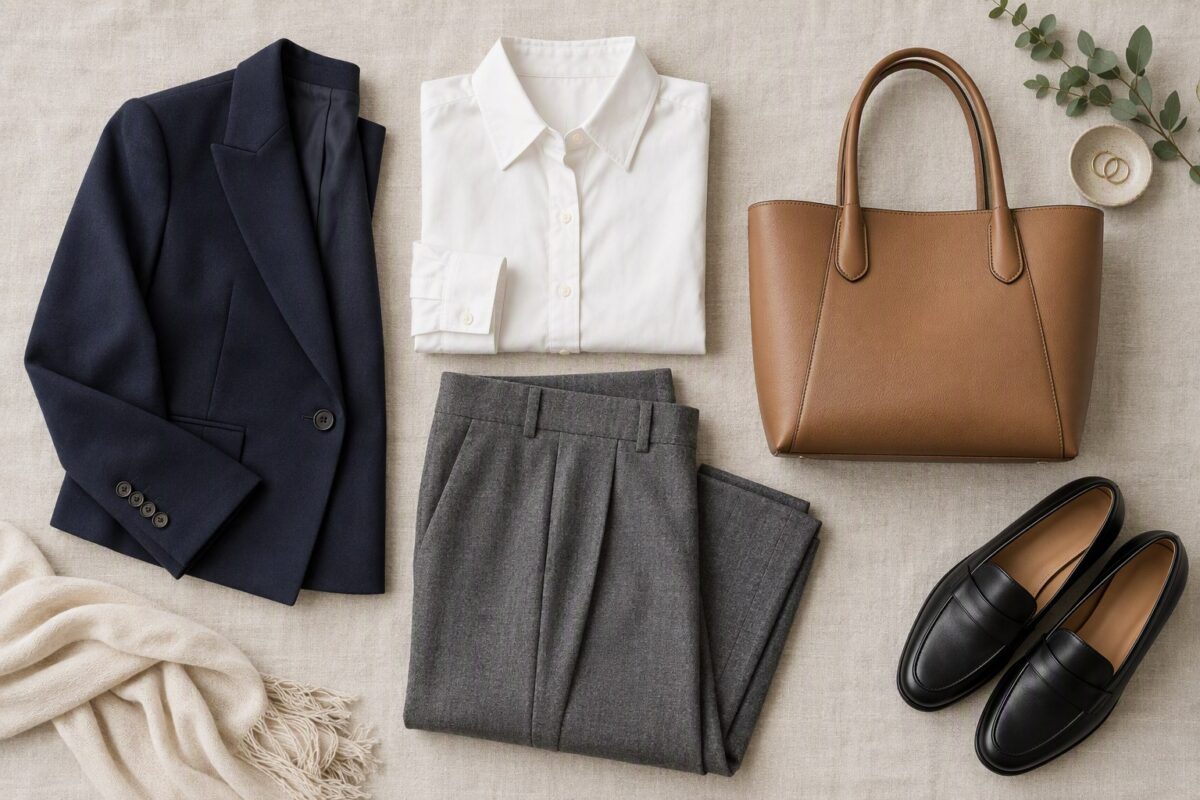
Most people dress for work more often than for anything else, yet the work wardrobe is usually the least planned part of a closet. The result is a rail of clothes and the familiar feeling of having nothing to wear. This guide is about building a small, reliable rotation that fits your actual dress code without a spending spree.
Step one: decode your real dress code
- Formal or business: suits, structured tailoring, closed shoes.
- Business casual: tailored trousers or a skirt, a collared shirt or fine knit, loafers or low heels.
- Smart casual: dark, clean denim is often acceptable, but keep the top and shoes sharp.
- Casual or creative: comfort leads, but fit and presentation still read as competence.
A practical test: look at the three most senior people in your workplace and note what they wear on an ordinary Tuesday, not at an event. That is your real target.
The core pieces that do most of the work
For a business casual environment, a rotation of roughly fifteen pieces can cover a full week:
- Two pairs of tailored trousers in neutral tones such as navy, charcoal, black, or deep olive.
- One structured blazer that matches at least one pair of trousers.
- Three or four shirts or blouses in solid, low-pattern colours.
- Two fine-knit tops or sweaters for layering.
- One simple dress or skirt, if that suits your style.
- One dark, well-fitted pair of jeans for casual days.
- One pair of comfortable closed shoes you can genuinely walk in.
- One structured bag, sized to what you actually carry.
Treat this as a framework rather than a rule. The underlying principle is a small number of neutral, well-fitting pieces that all work together.
A colour strategy that saves you time
- Choose a base palette of two neutrals, for example navy and grey, or black and cream.
- Add one accent colour you enjoy and that flatters you.
- Every piece should work with at least two others you already own. If it only works with one outfit, it is a costume rather than a wardrobe piece.
A disciplined palette means every combination is a valid outfit, which is what removes morning decision fatigue.
Fit and fabric matter more than brand
- A mid-priced garment that fits well reads better than an expensive one that does not.
- Look for fabric with some weight and structure, flat seams, secure buttons, and linings that do not twist.
- A modest alterations budget, hemming trousers or taking in a waist, makes inexpensive pieces look considered.
- Avoid thin, sheer, or high-shine synthetics for structured pieces. They crease easily and read as inexpensive even when they are not.
- Natural fibres with a little stretch usually hold their shape through a working day better than pure synthetics.
Shoes and bags that carry the week
- Two pairs of shoes in rotation is the realistic minimum. Rotating lets leather rest and extends the life of both pairs.
- Choose a shape you can walk in for a commute, not just sit in. Discomfort shows in posture.
- A plain, structured bag in a neutral tone works with everything. Choose a tote if you carry a laptop, a small crossbody if you do not.
- Keep shoes clean and soles or heels repaired. Scuffed shoes undercut otherwise smart clothing faster than anything else.
Build it gradually, not in one shopping trip
- Start by identifying the three outfits you already repeat and like. Those are your foundation.
- Buy one good piece at a time, inside your base palette, only when it fills a genuine gap.
- A simple rhythm: each season, replace the two most worn-out items and add one versatile new piece.
- Test before committing. Try the garment with three outfits you already own. If it works with fewer than two, leave it.
- End-of-season sales are the cheapest time to buy the neutral, classic pieces that never date.
Caring for the rotation so it lasts
- Wash tailored pieces less often than you might expect. Wool and structured blends freshen simply with airing.
- Store knitwear folded rather than hung, so the shoulders do not stretch.
- Brush shoes and let them rest a full day between wears.
- Keep a small repair kit: a needle, matching thread, spare buttons, and a lint roller. Small fixes protect the whole rotation.
- Hang structured pieces on proper hangers. Wire hangers distort shoulders over time.
When the dress code is unclear
- Ask before your first day if you can. One question prevents weeks of discomfort.
- Start slightly more formal than you expect, then relax once you have read the room. Dressing down is easier than dressing up.
- Keep one tidy backup within reach: a plain blazer or a clean shirt handles unexpected meetings.
- Watch what people wear to client-facing meetings. That usually reflects the real standard rather than the handbook.
- If your workplace is genuinely mixed, settle on a consistent personal uniform and stay with it. Consistency itself reads as professionalism.
Frequently asked questions
How many work outfits do I actually need? Five to seven complete outfits covers a week. With a disciplined palette, fifteen well-chosen pieces produce far more than seven combinations.
Is it worth spending more on shoes or on tailoring? Both. Shoes affect comfort all day and tailoring affects how everything looks. Budget for both before buying more tops.
Can I wear jeans to a business casual office? Often yes, in a dark, clean wash with no distressing, paired with a sharp top and proper shoes. Check your workplace first.
How do I look professional without looking dull? Keep the silhouette simple and add interest through one accent colour, a texture, or a single piece of jewellery rather than through busy patterns.
How often should I replace work clothes? When fabric pills, fades, or loses shape, or when fit changes. Replacing one or two pieces a season keeps the rotation fresh without a large spend.
Final thoughts
A professional look is less about quantity and more about consistency: a small palette, good fit, clean shoes, and a rotation you can dress from without thinking. Build it slowly in your base colours and replace pieces as they wear out. You will look more put-together on a modest budget than most people who simply buy more.
