
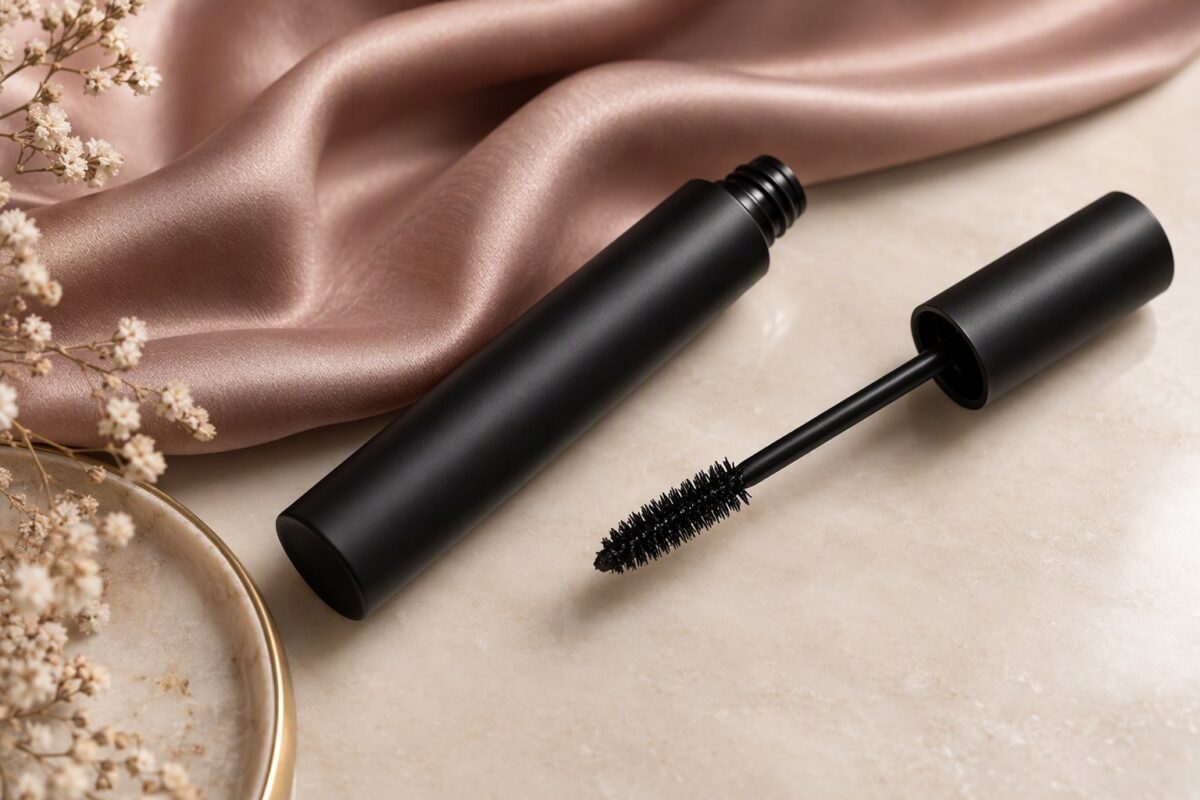
Mascara is the most personal product in a makeup bag. Two people can use the same tube and get completely different results, because the outcome depends as much on your lash type and the wand as on the formula itself. This guide breaks down what each label really means and how to choose deliberately instead of by habit.
Start with your lashes, not the brand
- Thin or sparse lashes: a volumising formula with a dense, bushy wand.
- Short lashes: a lengthening formula with a slim, tapered wand and fibre technology.
- Straight lashes that point downward: a curling formula or curved wand, plus a lash curler used before application.
- Long, thick lashes: almost anything works. A defining or separating formula avoids a heavy look.
- Sparse inner corners: a small precision wand reaches the short lashes without smudging the lid.
What the formula labels actually mean
- Volumising: waxes and often fibres coat and thicken each lash. Builds fastest and clumps fastest.
- Lengthening: a lighter film with fibres or polymers that extend the tip.
- Curling: a drier, stiffer formula that sets the lash in an upward position.
- Defining or separating: a thin film that emphasises individual lashes.
- Tubing: a polymer formula that wraps each lash and slides off with warm water. Excellent for sensitive eyes and for anyone who dislikes scrubbing, though weaker at dramatic volume.
- Waterproof: holds a curl and resists tears and sweat. Drier in texture, harder to remove, and potentially drying over time.
The wand matters as much as the formula
- Dense, fat brushes pick up more product and build volume quickly, but clump sooner.
- Slim, tapered brushes coat precisely and separate well. Ideal for lower and short lashes.
- Curved brushes follow the lash line and lift the outer lashes.
- Comb or spoolie-style brushes separate lashes and are forgiving for beginners.
- Ball-tip wands reach the inner and outer corners.
A useful principle: if you love a formula but the brush fights you, keep the formula and change the wand. Wands are inexpensive and interchangeable.
Why your mascara clumps, and how to stop it
- Pumping the wand pushes air into the tube and dries the formula. Twist the wand instead.
- Too much product on the brush. Wipe the tip against the tube edge before the first coat.
- Applying the second coat too late. Layer while the first coat is still slightly wet.
- Old mascara. Once a formula thickens it will clump no matter what you do. Replace every three months.
- Mixing techniques. A Z-shape motion from the root builds volume; a straight upward sweep builds length. Pick one per coat.
Waterproof: when it helps and when it hurts
Waterproof formulas earn their place for occasions: humid weather, swimming, emotional events, watery eyes, and holding a curl all day. They are less suited to daily use if your lashes are dry or brittle, or if you dislike rubbing at night.
Removal is the trade-off. Use an oil-based or bi-phase remover, press and hold for ten to fifteen seconds, then wipe gently downward. Never rub.
Removing mascara without damaging your lashes
- Soak a cotton pad with remover and press it against the closed eye for ten to fifteen seconds.
- Let the remover dissolve the product rather than pulling at the lashes.
- Work downward along the lash, not side to side.
- Tubing mascara removes with warm water and gentle pressure, a good option if you tend to be rough.
- Sleeping in mascara is the quickest way to break lashes and cause irritation.
Everyday versus evening: adjusting one product
You do not need two mascaras. You need two techniques.
- Daytime: one or two light coats of a defining or lengthening formula keep the look clean and appropriate for work.
- Evening: build volume with a denser wand, and add the second coat to the outer lashes only, which lifts the eye.
- Same formula, different approach: fewer coats for day, more for night. Changing technique beats changing product.
- A lash curler used before application adds more lift than an extra coat of mascara, and it never clumps.
Keeping lashes healthy between applications
- Remove mascara every night. This single habit prevents most lash breakage.
- Avoid waterproof formulas on consecutive days if your lashes feel brittle.
- Never curl lashes that still carry yesterday’s mascara.
- Give your lashes a break from mascara one or two days a week when you can.
- If lashes look sparse over time, check your removal technique before blaming the formula. Gentle removal matters more than the product.
Frequently asked questions
Does mascara make lashes fall out? Normal shedding happens regardless of mascara. Aggressive rubbing and sleeping in it cause real loss.
Should I curl before or after mascara? Before. Curling afterwards can crimp and break coated lashes.
How do I stop smudging under the eyes? Choose a smudge-resistant rather than fully waterproof formula, apply lightly to the lower lashes, and set with a fine dusting of powder beneath the eye.
Is expensive mascara worth it? Not automatically. Formula and wand shape matter far more than price, and replacement cadence matters more than brand.
Can one mascara do everything? Yes, but a tubing formula for everyday and a waterproof one for occasions is a common and practical pair.
Final thoughts
Match the wand to your lash type, layer while the first coat is still wet, and replace the tube every three months. Those three habits solve most mascara complaints. Buy for the result you want on your own lashes rather than for the photograph on the packaging.
